Tenet
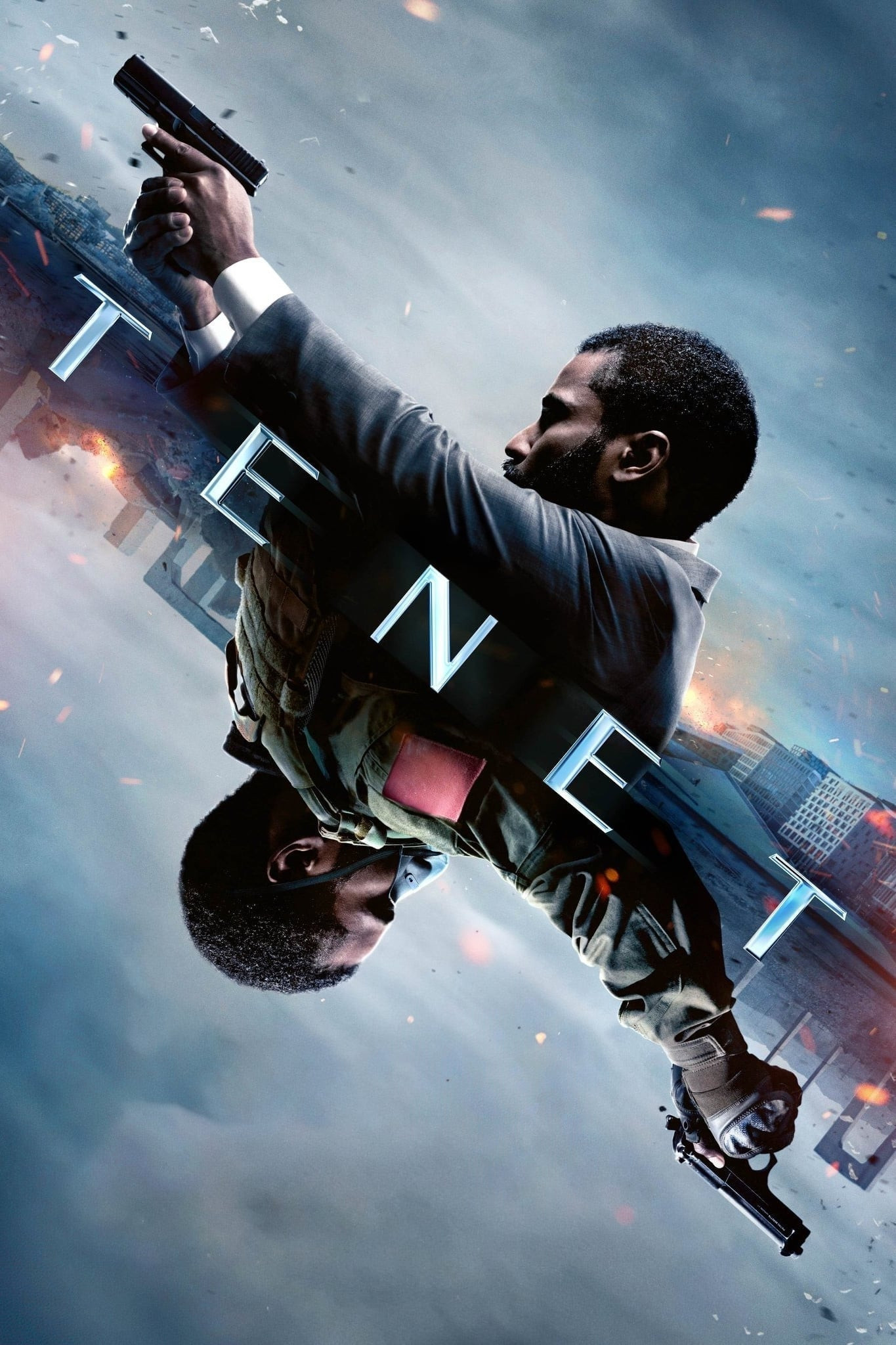
The idea of "time inversion," which enables persons and objects to move backward while the world goes forward, is used in the film's action sequences to create visually confusing situations. The highway pursuit, which features exciting visual contradictions when an inverted automobile uncrash, is one example. The action is complicated by explosions that un-explode and players re-engaging in combat during the climactic "temporal pincer" attack, in which red-team soldiers advance through time and blue-team soldiers move backward. Scenes involving hand-to-hand fighting, such as the battle between the protagonist and his inverted ego, showcase tactical intricacy and a distinct dual viewpoint that enhance the viewing experience.
Tenet is characterized by ambition, as Christopher Nolan skillfully combines quantum mechanics and James Bond-style intensity to create a blockbuster that encourages both intellectual engagement and exhilarating visuals. Audiences are challenged to juggle numerous timeframes by the film's unusual structure, which presents events reconstructed through inverted perspectives. This method prioritizes conceptual depth over simplicity and appreciates audience intelligence. The complex seven-country production rejects simpler computer-generated imagery in favor of actual stunts. The film's reluctance to simplify is noteworthy in a world where franchise-driven entertainment predominates, even though its success is still up for dispute.
Using 70mm film and IMAX cameras, Hoyte van Hoytema's cinematography produces pictures of remarkable clarity and scale while enhancing the film's visual coherence despite temporal disorientation. To provide instant visual comprehension, a color-coding scheme designates blue lighting for reversed sequences and red lighting for forward movement. The clarity of reversed motions is aided by camera movements that strike a balance between observant framing and traditional spy fluidity. A final battle set in a desolate industrial backdrop and a sailing scenario illuminated by golden hour light are noteworthy scenes. The film should be viewed on the biggest screen possible because of its rich visual features.
The ensemble's performance emphasizes the importance of human presence, with John David Washington playing the Protagonist as a quintessential spy stereotype—capable, quiet, and emotionally repressed, experiencing moments of true wonder despite temporal challenges. His powerful performance of "We live in a twilight world" highlights a change in the reliability of reality. Charm and ambiguity are added by Robert Pattinson's Neil, who displays a bittersweet detachment connected to his subtle gestures of premonition of future events. During the inverted car scene, Elizabeth Debicki's Kat skillfully conveys panic and emotional depth while embodying wounded dignity. Even though he resembles other Bond villains, Kenneth Branagh's Andrei Sator oozes fear with his rapacious moves in lavish environments.
Tenet's structural architecture makes it more rewatchable because each viewing deepens one's comprehension of its complex story. On later viewings, the film's first confusing sequences reveal layers of meaning, such as the importance of Neil's charm and the peculiar way injuries are portrayed. This intricacy isn't merely decorative; it illustrates the idea of how perspective modifies understanding. The action sequences, particularly the temporal pincer, show new levels of synchronization and show how the red team's forward actions and the blue team's backward knowledge interact.
Every department exhibits technical achievement. For smooth inversion, visual effects employ realistic techniques where actors execute movements backwards. Reversed audio cues that indicate temporal direction are used in sound design to create a sonic landscape. Jennifer Lame's editing preserves Nolan's cross-cutting technique while guaranteeing consistency across several timelines. The score by Ludwig Göransson uses brassy urgency and synthesizer fear to convey emotional depth. While maintaining consistent and believable temporal technology, production design distinguishes locations visually.
One of the film's distinguishing characteristics is its narrative complexity, which can be both an attraction and a challenge. It functions on several levels, including a deterministic causal framework, complex temporal mechanics, and a superficial spy thriller. The screenplay introduces its laws through fast-paced exposition, making them more difficult to understand through action. This intricacy creates emotional distance for the spectator while highlighting topics of temporal perception, determinism versus free agency, and the cost of knowledge. Keeping track of these mechanics may be both cognitively stimulating and draining, much like doing a crossword puzzle in the middle of a continuously evolving story.
The movie's emphasis on philosophical aspects comes at the expense of character development. The protagonist has no personal identification or past; he is only identified by his title. Neil's character is similarly shallow, and the actor's portrayal makes his sacrifice seem more meaningful than any real depth. Although Kat undergoes the most significant emotional transformation—from an abused wife to a self-sufficient agent—her actions seem to be determined more by the plot than by the maturation of her character. The villains, especially Sator, are reduced to utilitarian roles due to their basic motives. In the end, the audience's emotional engagement is overshadowed by the film's complex temporal dynamics.
The film's design creates confusion, which shifts from productive disorientation to incoherence, especially in the middle act. It is challenging to follow the protagonist as they travel back in time because there are no narrative or visual anchors. Simultaneous character interactions across many temporal orientations complicate the Tallinn sequence, necessitating extreme focus that may interfere with the viewer experience. Many spectators become disinterested in following the story mechanics and lose interest in the characters' outcomes as a result of the movie's absence of traditional cinematic time transitions.
Because of Christopher Nolan's thick sound mixing, the film's sound design is criticized as a major failure. It is difficult to understand important exposition pertaining to storyline and character interactions since Ludwig Göransson's score and ambient effects frequently block out speaking. The opening scene in the opera house serves as an example of this problem, as the symphonic sound obscures the speech. The film's philosophy of prioritizing emotional connection over narrative clarity is contradicted by the mixing choices, which imply a disregard for the audience's comprehension.
Tenet is a film that combines irritating emotional opacity with astounding technical achievement. The action scenes are truly unlike anything else in commercial cinema, the temporal mechanics are conceptually rigorous even when they are overwhelming, and the craftsmanship in every department is flawless, making it a successful example of what blockbuster filmmaking can accomplish when ambition and resources are in balance. But as a human story, it falls short, replacing emotional resonance with auditory bombardment and character depth with puzzle-box intricacy.
Repeated viewings enhance the film not only because of improved comprehension but also because the structural design becomes truly elegant—a palindrome in both shape and title. However, the need for a second viewing is also an acknowledgement of the first failure; a movie that needs to be seen several times to be properly appreciated is one that hasn't made an impact right away.
Tenet provides special benefits to those who are prepared to comply with its expectations. It might seem like a technical virtuosity exercise that forgets why we watch movies in the first place to those who are looking for the emotional fulfillment of Nolan's best work (The Dark Knight, Inception, and Interstellar).
Staff:
Directed by: Christopher Nolan
Written by: Christopher Nolan
Produced by: Emma Thomas and Christopher Nolan
Starring: John David Washington, Robert Pattinson, Elizabeth Debicki, Dimple Kapadia, Michael Caine, and Kenneth Branagh.
Cinematography: Hoyte van Hoytema
Edited by: Jennifer Lame
Music by: Ludwig Göransson
Production company: Syncopy
Distributed by: Warner Bros. Pictures
Release date: September 3, 2020
Running time: 150 minutes


Comments
Post a Comment