Venom: Let There Be Carnage
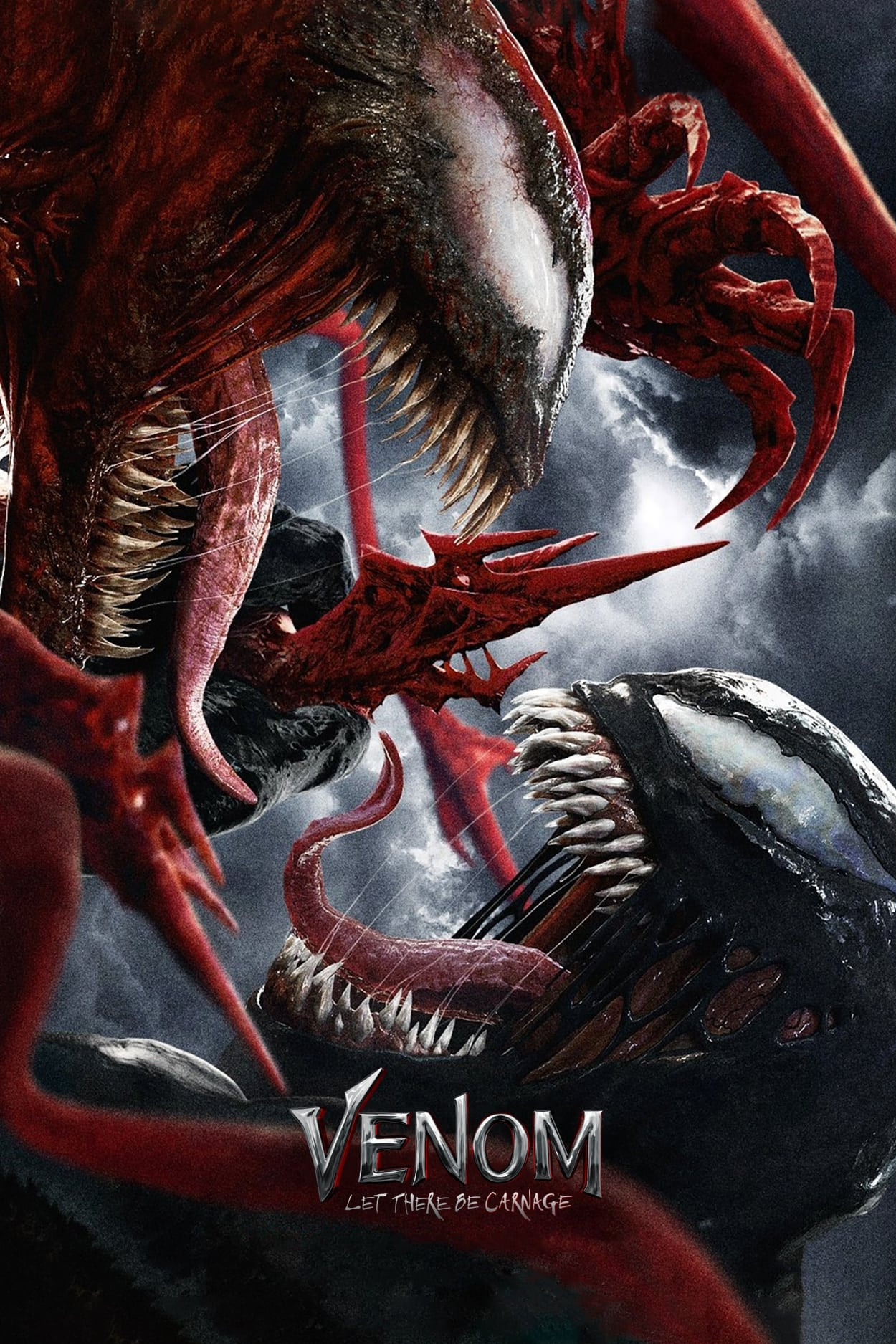
Venom: Let There Be Carnage by Andy Serkis is a peculiar relic of pandemic-era cinema, a follow-up that feels more like a mad dash through story threads in an attempt to appease fans before the next wave of MCU integration makes it obsolete. Character development, thematic coherence, and basic storytelling logic are all casualties of its own momentum as it speeds through its storyline at a dizzying pace, making it the rare modern blockbuster that feels too short rather than too lengthy at a svelte 97 minutes. However, despite this chaotic structure, the movie is able to maintain and even improve upon the one aspect that made its predecessor a surprising success: the truly strange, strangely endearing chemistry between Eddie Brock (played by Tom Hardy) and his alien symbiote partner. It is a B-movie with a blockbuster budget that celebrates its own ridiculousness without adding anything significant to it. It is a film of frustrating paradoxes that is both more enjoyable and more problematic than the original.
Tom Hardy's dedication to this material continues to be the driving force behind the franchise. His portrayal of Eddie Brock and Venom, via vocal modulation, both use frequencies that go against the norm for superhero acting. Hardy creates a comedy of discomfort that is both funny and strangely moving by muttering, yelling, and physically changing into a man who is literally out of control of his own body. Here, Eddie and Venom's "odd couple" relationship, which was introduced in the first movie, intensifies into something that like romantic comedy. Venom's journey of self-discovery at a rave, their disagreements over boundaries, and their breakup and reconciliation—these scenes blaze with a passion that the rest of the movie finds difficult to match.
Hardy's physical humor is especially noteworthy. Hardy's ability to perform against himself is demonstrated in the moment where Venom makes breakfast while Eddie tries to continue talking to his ex-fiance Anne (Michelle Williams), resulting in a smooth fusion of extraterrestrial excitement and human annoyance. Hardy's body language totally changes during the pivotal battle when Eddie eventually gives Venom complete control, indicating a man who is both free and afraid of his own strength.
Woody Harrelson steps in as Cletus Kasady, bringing his trademark erratic energy to a part that requires complete devotion to insanity. Harrelson's passion keeps his Cletus from becoming merely pitiful, even though he is more of a collection of trauma and tics than a distinct persona. Even if the CGI symbiote sometimes hides his presence, Harrelson's transformation into Carnage—achieved through a blood ritual that makes little sense but looks appropriately grotesque—allows him to expand his portrayal into pure physical villainy.
Serkis's motion-capture skills are useful in the action scenes, especially in the symbiote-on-symbiote battle. Visceral pleasures are provided by the final confrontation between Venom and Carnage, which takes place atop a cathedral that is still under construction. The two animals tear down buildings and each other with gleeful destruction. The symbiotes' ability to change their shape—tendrils turning into blades, shields, and wings—is highlighted in the dance, which occasionally produces truly beautiful visual pandemonium.
But the film's hurried pacing also detracts from these scenes. There are no apparent geography or stakes, and fights start suddenly, increase rapidly, and end abruptly. Despite allowing for amazing monster design, the film's PG-13 rating sanitizes the violence in ways that undermine the horror elements; bodies are flung but seldom ever seen, and the symbiotes' eating of victims takes place in shadow or off-screen. As a result, action is impressive to watch but challenging to invest in; it is technically sound but emotionally hollow.
Character development is where Let There Be Carnage falls short the most. As the movie comes to a close, Eddie Brock is still unable to control his violent alter ego, still attached to Venom, and still yearns for Anne. The breakup-reconciliation arc serves as a metaphor for the movie's progress, but it feels more like a rehashing of the first movie than an extension of it. Eddie's journalistic work, which is essential to who he is, is given little consideration; his relationship with police detective Mulligan (Stephen Graham) is introduced and then abruptly ended.
Even worse is the suffering endured by Cletus Kasady. The movie's marketing promised "Carnage," but instead it presents a villain with obstinately nebulous objectives. Although the film skips over their past in a montage and subsequently ignores Shriek for most of the running time, his romance with Frances Barrison/Shriek (Naomie Harris) reveals emotional depth—the two outsiders finding connection in their common trauma. Other than generic devastation and retaliation against Eddie for... questioning him, Cletus's objectives are unclear when he eventually completes his symbiotic change. Why Cletus deliberately targets Venom and what he aims to accomplish beyond pandemonium are never made clear in the screenplay.
Although technically sound, Andy Serkis's directing falls short of forcing a cohesive vision onto the content. Without defining guidelines for any of the tones—horror, comedy, romance, and action—the movie veers between them. The tempo is so fast paced that it is exhausting; sequences that need a break are shortened, and Eddie and Venom's constant banter goes on for too long. The editing, especially in the first act, seems to have been done with the goal of rushing to the symbiote conflicts at the expense of emotional depth and world-building.
The visual aesthetic is unoriginal, falling back on the hazy color scheme and unsteady camera work of other superhero movies. San Francisco's setting potential is squandered; it is reduced to a background rather than a character. None of the jail scenes, the asylum, or the cathedral have a distinctive visual identity; instead, they serve as generic settings for generic conflicts.
Kelly Marcel's script functions at the first draft level, offering ideas without delving into them and settling disputes in a convenient way. Why does Carnage want to kill Shriek in spite of their love for each other? The parameters of symbiote bonding are still incredibly ambiguous. Why did Venom acquire the capacity to fly all of a sudden? Why does the bell of the cathedral, which has been identified as the cause of the symbiotes' vulnerability, possess this particular quality? The movie poses these queries without attempting to provide a response, putting velocity ahead of reason.
Hardy's spontaneous muttering and awkward explanation dumps that border on comedy alternate throughout the dialogue. Characters give impassioned speeches that thud, explain narrative mechanics in conversation, and reveal their objectives directly to the camera. Scenes are only saved from complete collapse by Hardy's dedication to the subject matter and the innate humor of the Eddie-Venom relationship.
The movie Venom: Let There Be Carnage knows exactly what its audience wants—more Hardy, more Venom, more wild energy—and provides it so quickly that it forgets to give them a cause to care. The post-credits scene, which teases MCU integration through a multiversal shift, feels more like an acknowledgment that this story doesn't important on its own terms than it does like thrilling foreshadowing. It is a stand-in, a fan service delivery mechanism that forgoes the original movie's modest goals in favor of franchise connectedness.
The Hardy performance and the Eddie-Venom connection, however, continue to have an odd power despite this chaos. A superhero movie about male codependency, about a connection that is at once passionate, platonic, and parasitic, has a truly subversive quality. The franchise may still reach its full potential if subsequent films can take their time and really examine this relationship. Let There Be Carnage is currently a symbiote—messy, noisy, and ultimately hollow—that encapsulates a lost opportunity.
Staff:
Directed by: Andy Serkis
Written by: Kelly Marcel
Story by: Tom Hardy and Kelly Marcel
Based on: Marvel Comics
Produced by: Avi Arad, Matt Tolmach, Amy Pascal, Kelly Marcel, Tom Hardy, and Hutch Parker
Starring: Tom Hardy, Michelle Williams, Naomie Harris, Reid Scott, Stephen Graham, and Woody Harrelson.
Cinematography: Robert Richardson
Edited by: Maryann Brandon and Stan Salfas
Music by: Marco Beltrami
Production companies: Columbia Pictures, Marvel Entertainment, Arad Productions, Matt Tolmach Productions, and Pascal Pictures
Distributed by: Sony Pictures Releasing
Release date: October 1, 2021
Running time: 97 minutes


Comments
Post a Comment