Magic Camp
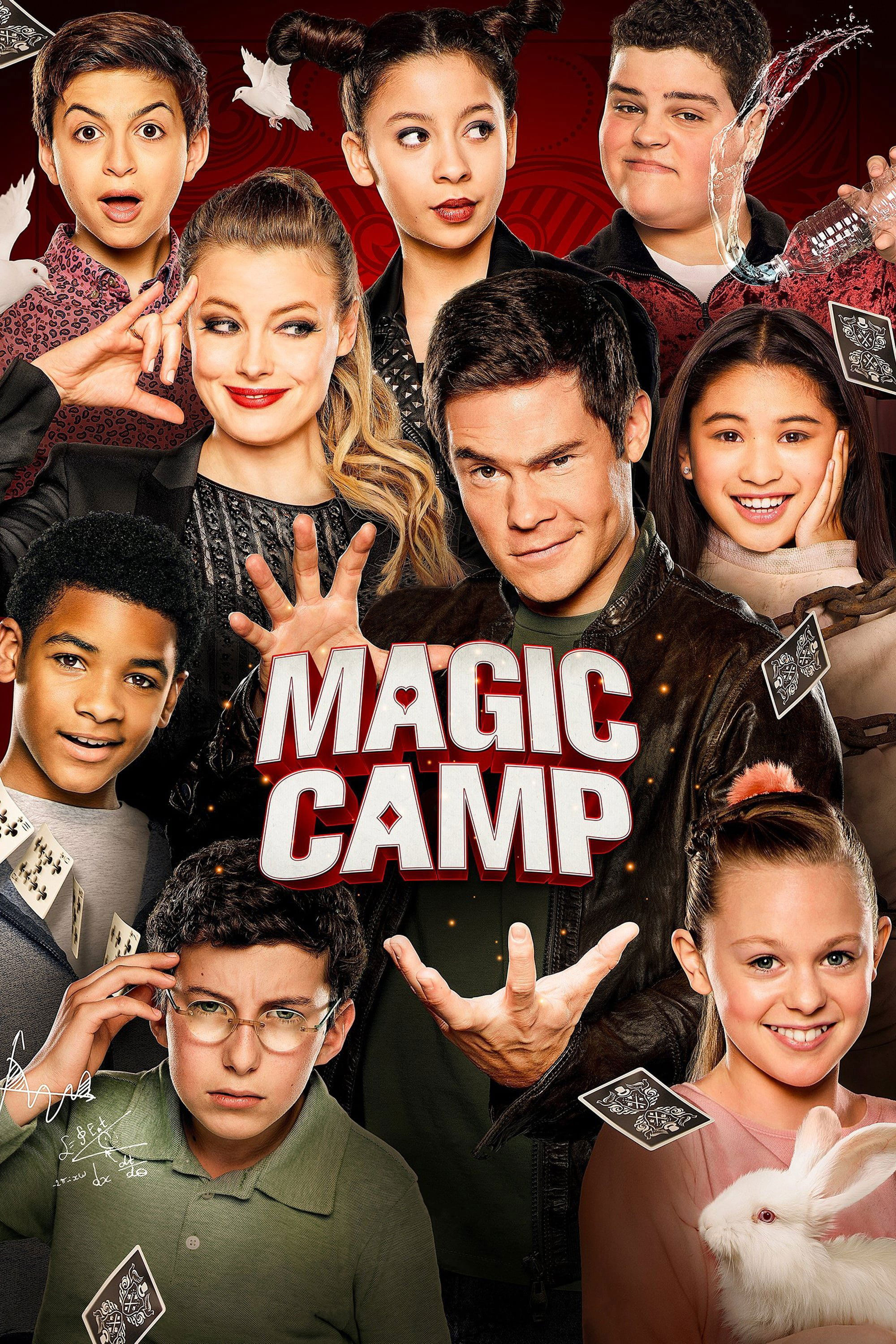
Reluctantly returning to the magic camp of his youth, Andy Duckerman, a failing magician from Las Vegas whose career has stagnated, finds that his old mentor Preston has given him the task of coaching a group of outcast young magicians for the camp's yearly tournament. Andy must assist his motley crew in regaining their confidence while rekindling his own love for performing as they take on Kristina Darkwood, his childhood adversary and now-successful magician.
In a part that could easily be forgotten, DeVine gives a passionate performance that combines flair with a painful past of unmet expectations. Strong comedic timing, especially during self-deprecating moments, helps his role transition from cynic to mentor. The supporting cast, which includes Josie Totah as Janelle and Cole Sand as Theo, effectively conveys a sense of unity despite their barely developed identities. The campers' transition from disagreement to support feels real, supported by real rehearsals as opposed to staged scenes. The movie grounds its imagination in the reality of skillful practice by emphasizing real magic feats over computer-generated imagery. Although the writing leaves some depths unexplored, Tambor, despite his controversy, offers warmth as Preston, showcasing a nuanced mentorship with DeVine. The movie picks up steam as it adopts the sports-movie structure, making good use of montage scenes and a thrilling competition that boosts visual interest.
The romantic subplot between Kristina and Andy in the movie is shallow and devoid of significant drama; it develops haphazardly from childhood friends to rivals to love lovers. Though it doesn't completely explore them, the screenplay mentions important subjects like mourning and the commercialization of art. Character reasons, such Andy's financial difficulties and Theo's father's passing, are very briefly discussed. The film's style is conventional and lacks the creative flair required to elevate the magic moments, even though Mark Waters directed it well. Moments of representation, such as Janelle's coming-out, seem more like checklist items than genuine progress, and the pacing falters, with the first act being slow and the second hurried. In the end, the movie follows a structure that is predictable, which makes it lacking in emotional resonance and surprise. This is made worse by Tambor's contentious casting in a delicate character.
Magic Camp is a basic, inoffensive family comedy about underdogs gaining confidence through performance, much like its poster suggests. It doesn't challenge its audience or make its superb actors look bad. The technical realism offers real value to kids who are interested in magic, while DeVine's dedication and occasional comedic lines give enough distraction for adults. It falls into the kind of streaming entertainment that is meant to occupy rather than transform; it is capable, unmemorable, and ultimately less magical than its subject merits.
Staff:
Directed by: Mark Waters
Written by: Micah Fitzerman-Blue, Noah Harpster, Matt Spicer, Max Winkler, Dan Gregor, and Doug Mand
Story by: Gabe Sachs, Jeff Judah, Matt Spicer, and Max Winkler
Produced by: Suzanne Todd
Starring: Adam DeVine, Jeffrey Tambor, and Gillian Jacobs.
Cinematography: Theo van de Sande
Edited by: Bruce Green and Robert Malina
Music by: Rolfe Kent
Production companies: Walt Disney Pictures and Team Todd
Distributed by: Walt Disney Studios Motion Pictures
Release date: August 14, 2020
Running time: 100 minutes


Comments
Post a Comment