Eternals
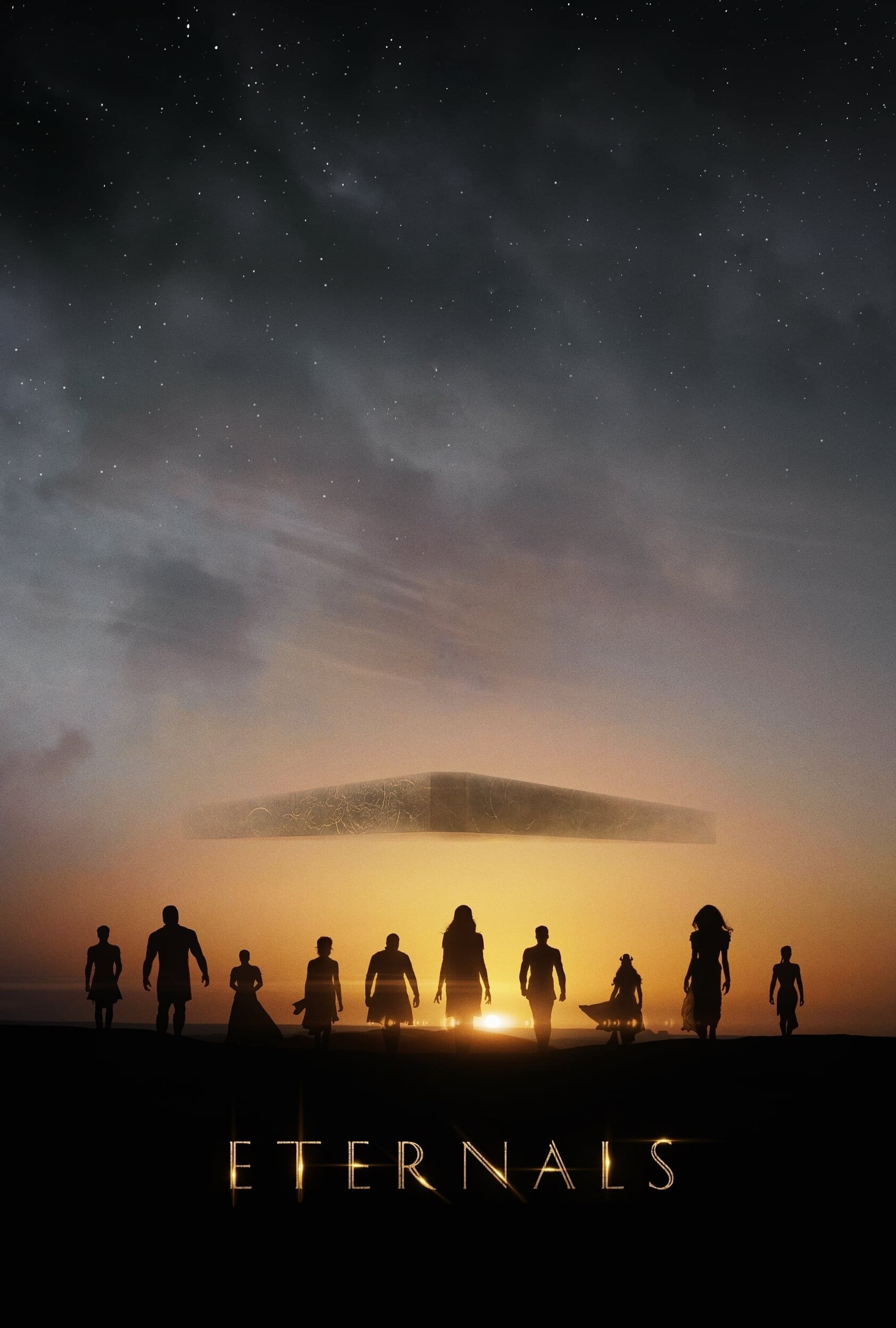
Eternals, directed by Chloé Zhao, is Marvel's most intriguing flop. It is a film with genuine creative ambition and moments of transcendence, but it eventually falters under the weight of its own vastness. It aims to combine Zhao's naturalistic, Terrence Malick-influenced sensibilities with the franchise's existing traditions, making it the MCU's first really millennial-scale venture into cosmic mythology. The end product is a work that is both too much and not enough. For every moment of visual poetry that suggests superhero cinema's untapped potential, there is a corresponding scene of exposition-heavy dialogue, underdeveloped character dynamics, or narrative convenience that reminds us we are still watching a product designed to fit within a larger corporate ecosystem. It is a film that dares to ask profound questions about humanity, divinity, and moral agency, then answers them with CGI battles and sequel-baiting stingers.
Eternals clearly succeeds in its cinematography. The stunningly beautiful photos created by Zhao and DP Ben Davis broaden the MCU's visual lexicon beyond its typical shiny functionalism. The earth and sky textures used in the film's location shooting, which took place in Mesopotamia, Babylon, Tenochtitlan, and contemporary London, help to ground the cosmic story in reality. The interactions in the modern age are framed with the personal intimacy that defined Zhao's Oscar-winning Nomadland, while the golden hour illumination that bathes the ancient sequences conjures a mystical timelessness.
Production design at its best is seen in the visual appearance of the Eternals themselves—costumes that combine celestial geometry with antique armor—and their enemies, the Deviants. Genuine awe is evoked by the Celestial Tiamut's eruption from Earth's core, depicted in scales that dwarf earlier MCU cosmic extravaganza. The movie gets close to the sublime when it lets its pictures breathe—when you just watch these immortal creatures go through human history.
Eternals stands out for its readiness to tackle philosophical and social issues that are typically overlooked or oversimplified in superhero movies. The film examines the trauma of immortality, the weight of memory, and the ethics of intervention; it asks the morality of serving cosmic entities whose objectives involve planetary sacrifice; and it challenges colonialism through the complicity of its immortal heroes in the establishment of empires. The film's premise that humanity's strength comes in its diversity is reflected in the cast's natural rather than performative diversity, which represents a range of nationalities, sexual orientations, and talents.
However, rather of being dramatized, this remark frequently stays theoretical. Though it is frequently argued, it is rarely demonstrated that the Eternals' non-interference principle, which barred them from preventing Thanos or other atrocities, had any significant effects on their relationships or psychology. Although the movie reminds us that these characters have experienced love and loss across millennia, it seldom ever lets us feel the weight of those years.
Eternals feature technically flawless action scenes that lack emotional resonance. Though physically appealing, each Eternal's unique abilities—energy projection, superspeed, mind control, and transmutation—are random from a narrative standpoint. The fights with the Deviants, especially the last showdown, turn into the CGI mayhem that the early section of the movie seemed to be able to escape. Characters pose and project energy without distinct stakes or spatial coherence, and the choreography misses the imaginative wit of Thor: Ragnarok and the visceral punch of Shang-Chi.
The smaller-scale displays of force, such as the warrior Gilgamesh's one decisive blow or the speedster Makkari's silent blur of sweeping a battlefield, are more effective. These scenes hint at what the movie may have been if it had placed more emphasis on intimacy and character than on spectacle and the end of the world.
Although the film's philosophical goals are sincere, the way they are presented detracts from them. Superhero films should explore issues such as the nature of humanity's "flaws" as actually their strengths, the value of individual lives against cosmic need, and the conflict between free will and determinism. However, they are mainly conveyed through discourse that clarifies rather than dramatizes, and by characters expressing their opinions rather than acting them out in conflict.
The story should be tragically propelled by the main philosophical conflict between Sersi's developing human attachment and Ikaris' devotion to their Celestial mission. The intricacy of millennia of interaction is instead condensed to a climactic confrontation that feels hurried rather than inevitable, and it is resolved by exposition and abrupt violence.
Character development is unavoidably a problem in Eternals, given its 157-minute duration and eleven protagonists. Some—Sersi, Ikaris, and Thena—are given storylines that, although being well-known, have emotional significance thanks to the dedicated performances of Gemma Chan and Richard Madden. Others—Kingo, Sprite, and Phantoms—indicate depths that the movie doesn't have time to delve into. The most poignant scene in the movie is the intimate household scene between Brian Tyree Henry's Phastos and his human husband, which seems to have been lifted from a better movie.
Kro, the Deviant leader whose metamorphosis from mindless beast to vengeful intelligence should provide as a thematic counterweight to the Eternals' own awakening, is the character most affected by the writing's shortcomings. Rather, he vanishes for extended periods, his reasons are unclear, and his loss seems pointless—a waste of the design team's visual inventiveness and Bill Skarsgård's voice performance.
The screenplay, which was written by Zhao, Patrick Burleigh, Ryan Firpo, and Kaz Firpo, is where Eternals eventually falls short. Frequently within the same scene, the conversation alternates between awkward explanation and Malick-esque voiceover poetry. Dramatic tension wanes as characters frequently reveal their personal histories, abilities, and the mythology of the movie. Instead of fostering mystery, the structure's abrupt shifts between ancient past and the present-day cause confusion because it is difficult to recall which links were developed in which timeline.
The pacing of the movie is affected by this structural incoherence. The deliberate slowness of the first half, which establishes the Eternals' dispersal and eventual reunion, conveys confidence. The second half feels rushed and urgent as it rushes through discoveries about their actual mission and the approaching end of the world. The necessity to support so many storylines dilutes the effect of major character decisions, such as betrayals, sacrifices, and romantic consummations, which arrive without enough buildup.
Eternals is a film with great pieces that don't come together to form a great overall. Its themes show the philosophical possibilities of the genre; its cast suggests the importance of diverse representation; and its cinematography suggests the artistic promise of superhero movie. However, its writing, which serves as the cornerstone for everything else, falls short of its goals due to the demands of franchise continuity, convenience, and exposition.
Because its reach exceeds its grasp, it is ultimately a noble failure that is more fascinating than many MCU successes. It provides rewards that more capable but less ambitious films cannot for those prepared to forgive its narrative dysfunction in favor of its aesthetic splendor and conceptual inquiries. However, it also serves as a warning that even directors who have won Academy Awards are unable to move past content that essentially misunderstands the dramatic structural requirements of the medium.
Even though The Eternals will never die, their movie already seems to be vanishing from memory—a lovely dream whose specifics vanish when you wake up.
Staff:
Directed by: Chloé Zhao
Written by: Chloé Zhao[a], Patrick Burleigh, Ryan Firpo, and Kaz Firpo
Story by: Ryan Firpo and Kaz Firpo
Based on: Eternals by Jack Kirby
Produced by: Kevin Feige and Nate Moore
Starring: Gemma Chan, Richard Madden, Kumail Nanjiani, Lia McHugh, Brian Tyree Henry, Lauren Ridloff, Barry Keoghan, Don Lee, Kit Harington, Salma Hayek, and Angelina Jolie.
Cinematography: Ben Davis
Edited by: Craig Wood and Dylan Tichenor
Music by: Ramin Djawadi
Production companies: Marvel Studios
Distributed by: Walt Disney Studios Motion Pictures
Release date: November 5, 2021
Running time: 156 minutes
[a]: Both as an individual author and as a member of Burleigh's writing team, Zhao is given credit.


Comments
Post a Comment