The Suicide Squad
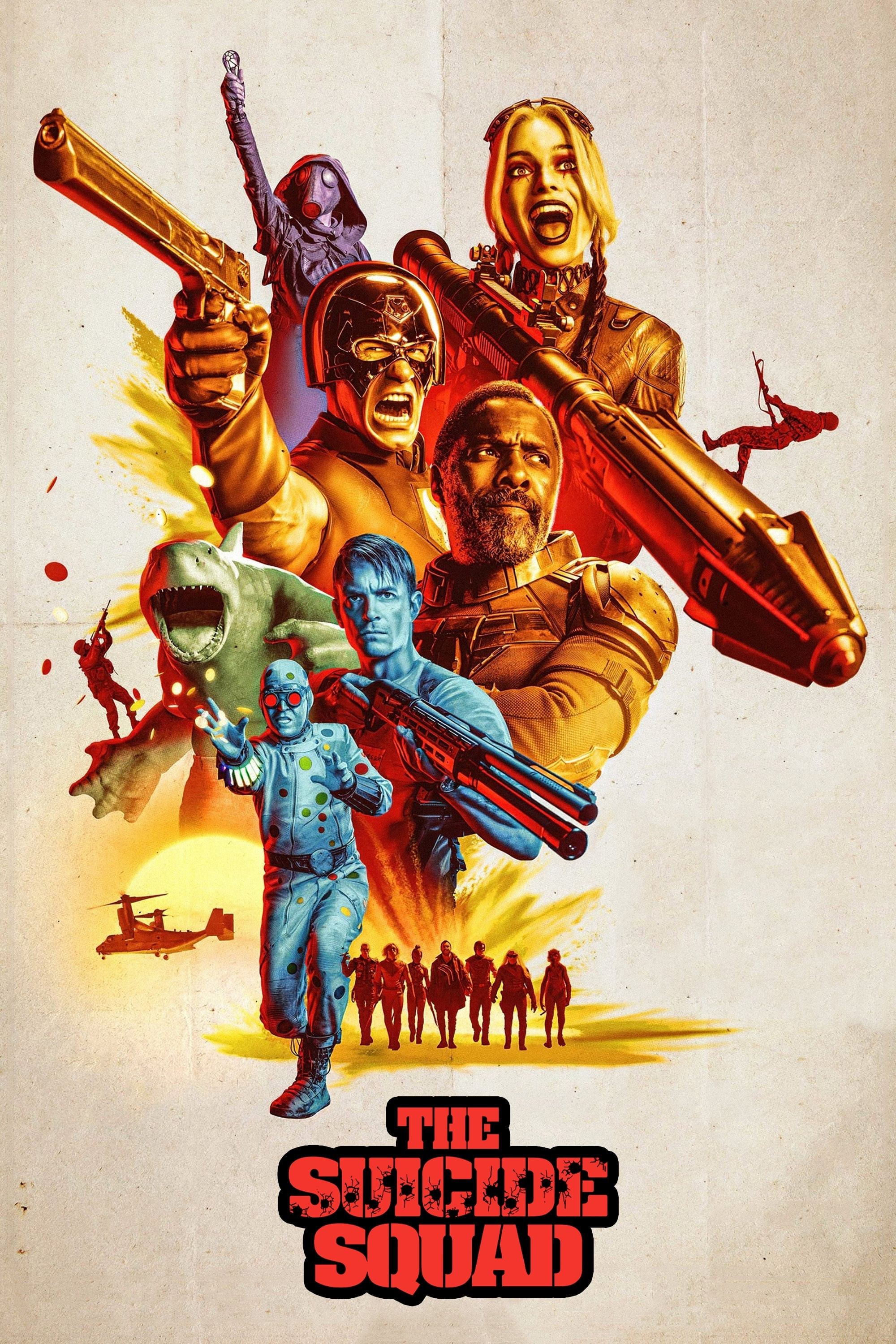
The Suicide Squad by James Gunn—notice the definite article that sets it apart from its 2016 predecessor—arrives simultaneously as a celebration, a reproach, and a correction. Gunn's vision bursts with such self-assured anarchic energy that it almost justifies the reboot-within-a-reboot conundrum, whereas David Ayer's film suffocated on studio interference and tonal confusion. This a superhero film in the form of an R-rated splatter, a spoof of a war film, or a punk rock opera. Gunn's direction is so confident, his ensemble so dedicated, and his aesthetic so fully realized that the film transcends its own cynicism to become something strangely joyful: a blockbuster about disposable people that argues passionately for their humanity. It shouldn't work—the plot is purposefully disposable, the body count is enormous, and the humor is frequently pitch-black.
The film's fundamental accomplishment is represented by Gunn's direction. He returns with nothing to lose and something to prove after Guardians of the Galaxy Vol. 2 and his brief dismissal from Disney. Using every tool in the cinematic toolbox—aspect ratio shifts, title cards, flashback structures, diegetic music, and animated interludes—The Suicide Squad is directed with the swagger of a filmmaker at the height of their creative freedom, producing an experience that is consistently visually stunning. By presenting the film's "anything can happen" attitude and employing a catastrophic narrative fake-out, the opening sequence alone positions Gunn as a filmmaker who views studio franchise filmmaking as a form of personal expression.
This vision is fully served by the visual spectacle. The film's settings, which include the strange innards of the extraterrestrial starfish Starro and a rain-soaked Corto Maltese beach, are depicted with macabre creativity and tactile realism. In order to create creatures that feel real rather like pixelated embellishments, the special effects, especially the creature designs for Weasel, King Shark, and the film's final nemesis, strike a balance between real-world and virtual aspects. In addition to establishing cinematic identity, the color scheme—saturated neons, blood spray, and military drab—creates a comic book look that pays homage to the original work.
Gunn's script gives each character a distinct pathology, desire, and storyline, but the 2016 movie could not explain why its criminal ensemble merited notice. Recognizing that the Suicide Squad concept—forced villains on suicide missions—is intrinsically tragicomic is what makes the movie so brilliant. Gunn adores these individuals despite their failures in life, villainy, and all other endeavors save survival.
The main chemistry is created by John Cena's Peacemaker and Idris Elba's Bloodsport, as their competition to see who can kill better exposes complementing fears. The film's structural backbone is provided by their "kill count" rivalry, their argument about the meanings of "peace" and "liberty," and their eventual appreciation for one another. Now in her third appearance, Margot Robbie's Harley Quinn finally gets material that is worthy of her acting; her escape from captivity and the "relationship" she has with the revolutionary leader show progress without compromising her chaotic nature.
However, the film's deep bench is its secret weapon. The emotional core of Daniela Melchior's Ratcatcher 2 is her relationship with her rats and her father's legacy, which bring real sorrow amidst the ridiculousness. With his mother issues and fatal condition treated with care, David Dastmalchian's Polka-Dot Man turns the most absurd D-list criminal into a character of Shakespearean tragedy. Additionally, Sylvester Stallone's portrayal of King Shark in "Nanaue" somehow transforms a great white who eats men into the team's most endearing member.
Dark comedy is like a serrated razor wielded by The Suicide Squad. Character, not circumstance, is the source of the humor—Polka-Dot Man's therapy sessions, Peacemaker's literal conception of peace, Bloodsport's dread of rats—and as we believe in these damaged individuals, the gags become more and more impactful. The crew discussing the morality of their mission while massacring dozens of soldiers in the film's most comedic scene is a prime example of Gunn's ability to strike a balance between tonal extremes without devolving into tastelessness.
The way the movie handles the superhero cliché is equally hilarious. The movie doesn't take a moment to grieve when characters pass away, which happens frequently, but it also doesn't make fun of their passing. The humor respects the humanity of its participants while acknowledging the ridiculousness of the genre. Throughout the duration of the movie, Gunn consistently upholds this challenging alchemy, only sporadically deviating into immature excess.
The soundtrack serves as both an emotional shorthand and a narrative engine. The Suicide Squad employs a more varied mix—Johnny Cash, Pixies, Louis Prima, and Jim Carroll Band—that makes sardonic remarks about the action while developing Gunn's own musical lexicon, in contrast to Guardians, which employed nostalgic pop to establish character identification instantly. The inclusion of "Just a Gigolo" during Harley's violent escape or "Rain" during the rain-soaked beach landing shows how music can transform set pieces from competent to iconic.
Equal recognition should be given to the sound design. An immersive auditory world that grounds the fantastic in tangible reality is created by the squelch of King Shark's feeding, the unique sound of each character's weaponry, and the general terror of the jungle setting.
Even though the entire cast does a fantastic job, Margot Robbie's performance is the highlight, as she finally gets material that fits her dedication to the role. In this instance, Harley is post-Joker, post-breakdown, and beginning to resemble self-possession. Her escape from captivity, which combines violence, gymnastics, and visuals of flowers, is the character's most cinematic moment; it is a horrific ballet that is at once horrifying, amusing, and strangely beautiful. Robbie is the quintessential Harley Quinn because of her physical humor, line delivery, and ability to convey a deep sense of loneliness beneath the frenetic energy.
Under the guise of exploitation film, The Suicide Squad is a movie about broken people finding meaning in one another. It makes the case that a guy who controls rats can be just as heroic as any Superman, that family can be formed in the furnace of shared trauma, and that even the irredeemable can find redemption. Although these ideas are not new to Gunn, they are presented here with fresh vitality and inventiveness.
The picture is the most unique superhero movie of 2021 because of its unrelenting pacing, refusal to take itself seriously while taking its characters seriously, and unwavering dedication to artistic vision. It is not for everyone—the politics are cynical, the humor is dark, and the violence is graphic—but for those who are open to it, it offers something that is becoming more and more uncommon in franchise filmmaking: a single, unfiltered directorial voice.
James Gunn created important characters out of disposable ones. That's The Suicide Squad's alchemy.
Staff:
Directed by: James Gunn
Written by: James Gunn
Based on: Characters from DC
Produced by: Charles Roven and Peter Safran
Starring: Margot Robbie, Idris Elba, John Cena, Joel Kinnaman, Jai Courtney, Peter Capaldi, Sylvester Stallone, and Viola Davis.
Cinematography: Henry Braham
Edited by: Fred Raskin and Christian Wagner
Music by: John Murphy
Production companies: Warner Bros. Pictures, DC Films, Atlas Entertainment, and The Safran Company
Distributed by: Warner Bros. Pictures
Release date: August 6, 2021
Running time: 132 minutes


Comments
Post a Comment