Spider-Man: No Way Home
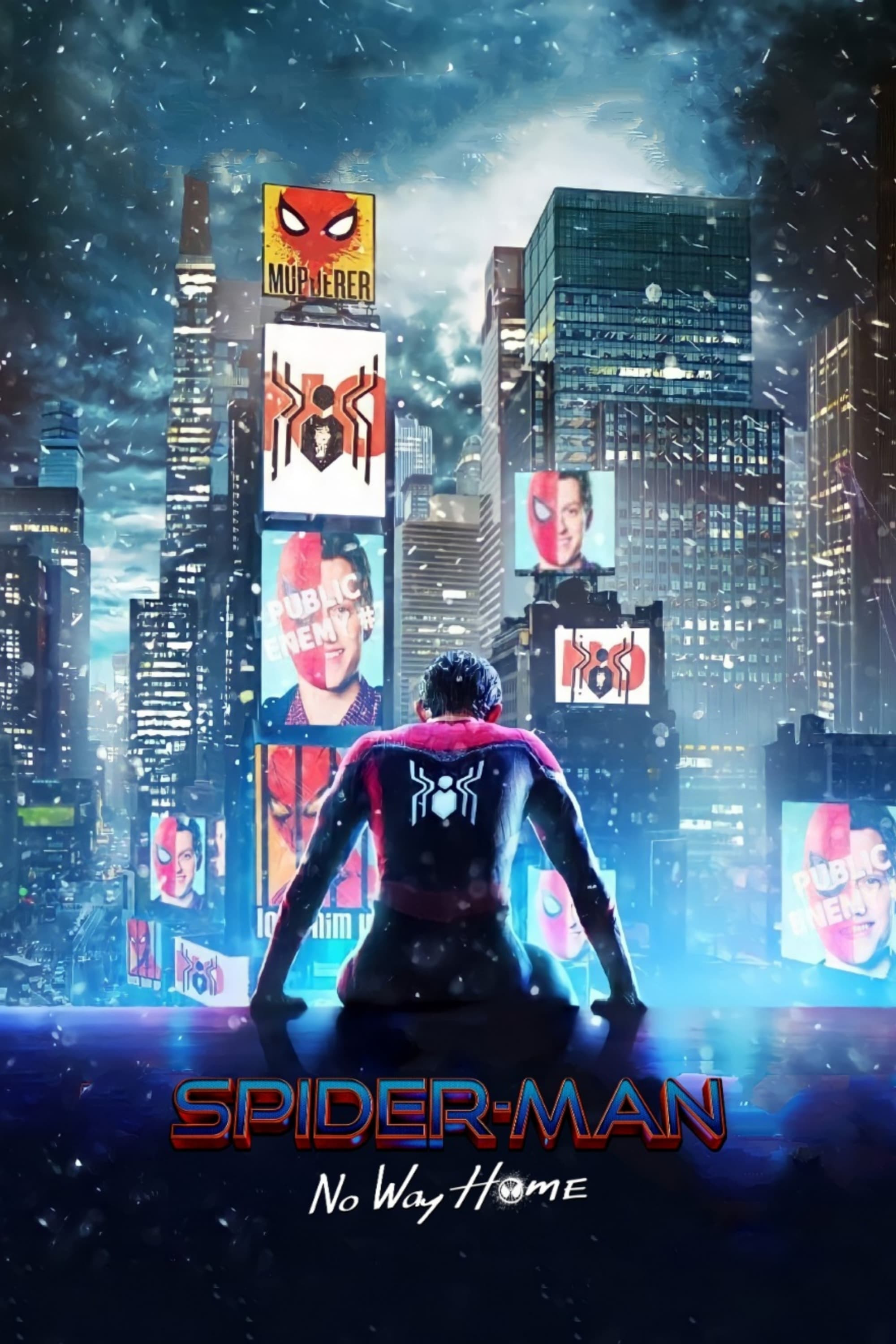
Spider-Man: No Way Home does something noteworthy in a time when superhero movies frequently place more emphasis on universe-building than narrative: it uses nostalgia as a tool for real emotional catharsis rather than as a stand-in for content. While the narrative scaffolding of Jon Watts' third Spider-Man film falters under the weight of its own aspirations, the film's core focus—its characters—remains unwavering, making it the most emotionally fulfilling MCU entry since Avengers: Endgame.
Some of the most creative set pieces in Spider-Man's filmography may be found in the action scenes. Watts at last makes the most of the character's athletic abilities, creating fights that equally employ the surroundings, intelligence, and acrobatics. numerous Spider-Men, numerous villains, and multiple emotional arcs are all juggled without collapsing into incoherence in the Statue of Liberty conclusion, which reimagines the monument as a titan brandishing a Captain America shield. Previous scenes show a deep comprehension of spatial dynamics and stakes escalation, especially the battle against the Green Goblin in the apartment complex and the showdown with Doctor Octopus on the bridge.
With few notable exceptions, the special effects mostly live up to the hype. Both Willem Dafoe and Alfred Molina's characters are able to transition smoothly out of 2002 and 2004, respectively, thanks to the incredibly successful de-aging technology used on them. While creating their own identity, the reality-warping effects and multiversal gateways preserve visual coherence with the established MCU aesthetics. However, the film's nighttime-heavy color scheme occasionally obscures rather than highlights the choreography, and several scenes—especially those involving entirely CGI Spider-Men in fast motion—slip into video game cutscene territory.
No Way Home's dedication to genuine feeling is where it really stands out. At its core, this is a movie about the awful cost of Peter Parker's decisions and the weight of heroism that Tony Stark forewarned him about. Even as it embraces multiversal absurdity, the picture never entirely abandons the tone of genuine desperation established by the choice to open with Peter's life in ruins, his identity revealed, and his college hopes dashed.
As Peter Parker, Tom Holland gives his best performance, enduring a trial that turns him from Tony Stark's eager apprentice into an independent hero molded by tragedy. Holland responds to the darkest material the MCU has attempted in the film's third act, especially the scene involving Aunt May's fate and its aftermath, with unadulterated, unadorned anguish. The film's emotional backbone comes from his transformation from a young guy looking for quick cuts to a man accepting responsibility—real responsibility, without the protection of mentors or technology.
Surprisingly generously, this character development is extended to the supporting actors. With her dread of being abandoned and her intense loyalty, Zendaya's MJ transforms from a flirtatious love interest to an emotional pillar, giving Peter inspiration that goes beyond simple heroism. Ned, played by Jacob Batalon, experiences his own crisis of purpose. His brief dalliance with magic and eventual return to friendship provides a nuanced remark on figuring out one's position in a world of superpowers. Cracks in the cosmic confidence of Benedict Cumberbatch's Doctor Strange, who is frequently reduced to exposition duty, allude to the character's impending gloom.
The film's brilliant decision to include Andrew Garfield and Tobey Maguire could have easily turned into cynical fan service. Rather, Watts and screenwriters Erik Sommers and Chris McKenna approach these iconic characters with respect and intent. The three Spider-Men's chemistry sparkles with instant sincerity, going beyond meta-textual tricks to create true friendship. Holland connects the two generations with a desperate eagerness, Garfield delivers healing humor and a protective instinct, and Maguire brings quiet grief and aged wisdom.
Their conversations provide the movie its most poignant moments as well as its most happy ones—comparing web-shooting techniques, talking about past lovers, and sharing the weight of loss. Garfield's redemption story, especially his opportunity to save MJ after failing to save Gwen Stacy, turns fan service into character service and provides him the closure that he was not given in The Amazing Spider-Man 2. Maguire's presence, whose Peter has faced similar horror and come out unharmed but scarred, grounds the multiversal maelstrom in real experience.
This strategy also works well with the returning villains. While Dafoe's Green Goblin—still the quintessential superhero movie villain—demonstrates that threat and sadness don't have to be mutually contradictory, Molina's Doctor Octopus is given a compassionate farewell that rectifies the tragedy of his original picture. Moments of dignity are given to even secondary enemies, such as Sandman and Electro, elevating them above their initial representations.
Despite all of its emotional victories, No Way Home is unable to overcome its structural flaws. To be honest, the plot is thin—little more than a string of growing issues brought on by one bad choice. The story is driven by Peter's decision to include Doctor Strange in identity erasing, his subsequent meddling with the spell, and his refusal to send the villains home to die, yet these choices frequently seem to be made more out of necessity for the storyline than character logic. The movie moves so fast, especially in the first part, that stakes become abstract and reasons become hazy.
The multiverse mechanics itself, which are still annoyingly ambiguous, are likewise thin. Instead of being consistent internally, the rules governing who remembers what, how the spell works, and what exactly qualifies as "everyone knowing Peter Parker is Spider-Man" appear to change based on dramatic necessity. While emotionally upsetting, the movie's ultimate solution—universal forgetting—raises practical issues that the story doesn't have the time or inclination to examine.
The production is rife with inconsistent quality. The humor, which is typically a Spider-Man mainstay, works sporadically; some jokes add the required lightness, while others undermine the real drama. The pacing, especially in the middle act, feels like a checklist being rushed through at times as it tries to strike a balance between villain introductions and emotional growth. The film's dependence on darkness as artistic cover is evident upon reflection, and several of the visual effects, as previously indicated, falter during the busiest scenes.
Spider-Man: No Way Home succeeds because of its emotional conviction alone, not because of its shortcomings. It is a picture that recognizes the fundamental reality of Spider-Man: that enormous strength entails great loss, and that heroism is characterized by the unwillingness to give in to failure rather than by the absence of it. The quiet moments—three Spider-Men discussing their suffering, a youngster bidding farewell to his last parent, a hero opting for anonymity over fame—give the significance, while the multiversal explosions provide the show.
At the end of the movie, Peter Parker is both alone and fully realized, devoid of everything outside of himself but at last endowed with the inner fortitude that characterizes him. It is disorganized, packed with information, and its plot breaks down when examined closely. It serves as a reminder that even in multiversal mayhem, the tiniest emotional beats have the most impact and is also the most human superhero movie of the current era.
Staff:
Directed by: Jon Watts
Written by: Chris McKenna and Erik Sommers
Based on: Spider-Man by Stan Lee and Steve Ditko
Produced by: Kevin Feige and Amy Pascal
Starring: Tom Holland, Zendaya, Benedict Cumberbatch, Jacob Batalon, Jon Favreau, Jamie Foxx, Willem Dafoe, Alfred Molina, Benedict Wong, Tony Revolori, Marisa Tomei, Andrew Garfield, and Tobey Maguire.
Cinematography: Mauro Fiore
Edited by: Jeffrey Ford and Leigh Folsom Boyd
Music by: Michael Giacchino
Production companies: Columbia Pictures, Marvel Studios, and Pascal Pictures
Distributed by: Sony Pictures Releasing
Release date: December 17, 2021
Running time: 148 minutes


Comments
Post a Comment