Zack Snyder’s Justice League
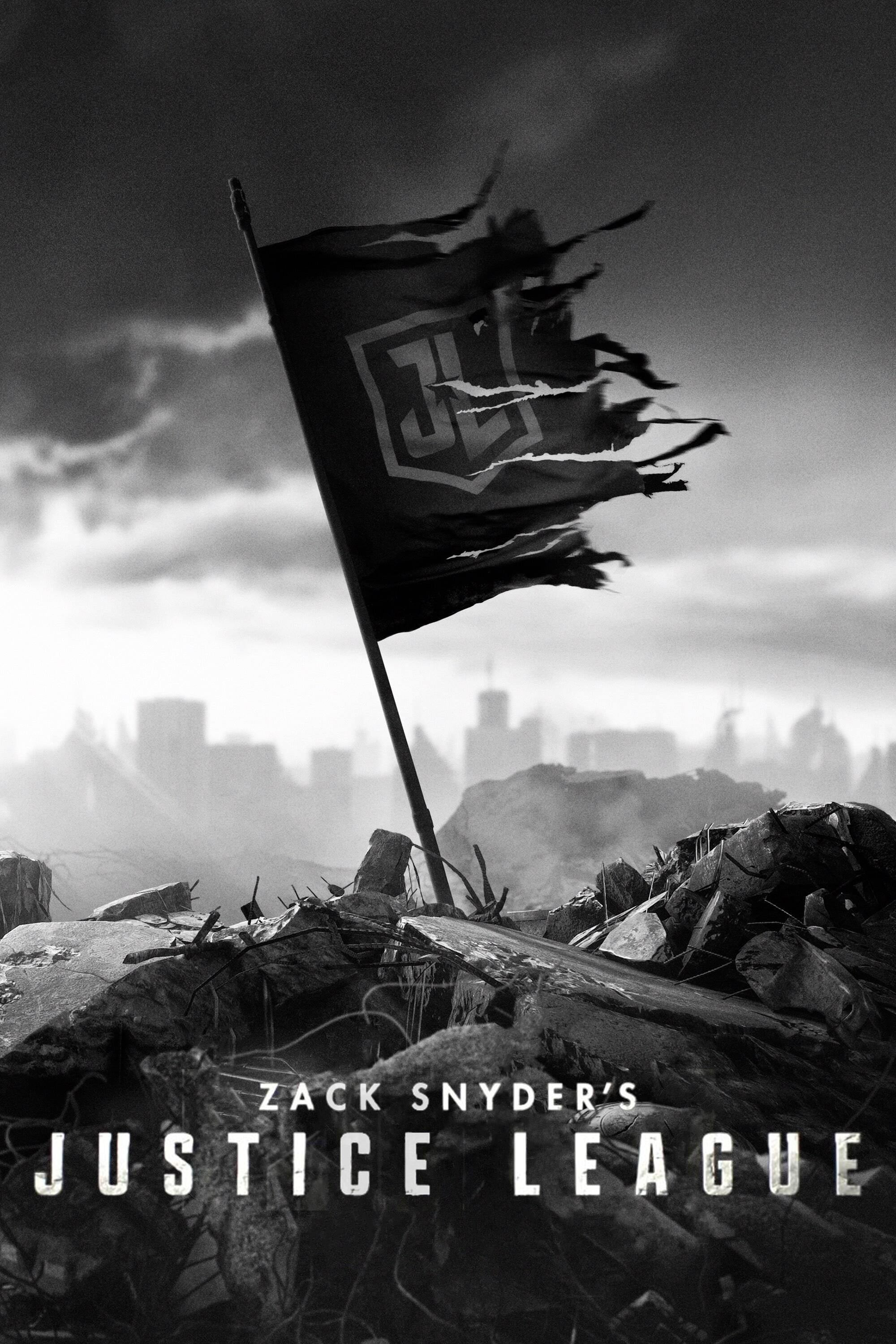
From the theatrical cut, the action in Zack Snyder's Justice League is a quantum jump. Here, Snyder's trademark slow-motion choreography—which was previously written off as style above content—serves a narrative function. In contrast to the warriors' valiant final stand, Steppenwolf's smooth, menacing motions set the stage for the Amazonian invasion on Themyscira with operatic grandeur. The tunnel battle under Gotham Harbor develops from an unremarkable skirmish into a pivotal scene where the skills of each hero naturally enhance one another. Most importantly, the final confrontation becomes a truly apocalyptic scene rather than a murky CGI jumble. The film's existence is justified solely by The Flash's time-reversal sequence, a bold visual poem that reframes the superhero genre's whole perspective on speed-based abilities.
This scope has not been tried in many Hollywood films. Snyder creates a mythological framework that spans millennia rather than just adapting a comic book. Six main characters, cosmic stakes, ancient history, and the setup for two unrealized sequels are all juggled in this movie. It's amazing that it makes sense at all. Here, the "Knightmare" sequence—technically sequel-bait—acts as a dystopian promise of repercussions and true nightmare logic. Unafraid of operatic excess, Snyder approaches DC's pantheon with the solemnity of Greek tragedy. The four-hour timeframe is commitment, not pleasure. This version breathes through its own excess, whereas the theatrical cut disintegrated under compromise.
An aura permeates every shot, from the booming score of Junkie XL to the desaturated color grading. Apokolips is truly horrible; Atlantis is bioluminescent and strange; Themyscira feels old and sun-drenched. For every realm, Snyder and cinematographer Fabian Wagner create unique visual languages. Metropolis is in golden-hour promise, Gotham is in continuous twilight, and the Russian nuclear wasteland is in ash-gray devastation. The movie feels pricey in a sense that is uncommon in modern blockbusters—each setting has weight, texture, and history. The Mother Boxes' scream, Parademons' mechanical moan, and Wonder Woman's theme's symphonic swell are all examples of the sound design that merit special attention.
Snyder's cut most significantly outperforms its predecessor here. The film's central theme is Cyborg's arc, which was reduced to comedic relief in 2017. The sadness, anger, and hesitant courage of Victor Stone are shown with striking precision by Ray Fisher. One of the most emotionally raw scenes in superhero movies is when he finds his father's last message and manipulates digital data to hear "I love you" one last time. Completely reshot for the theatrical cut, The Martha Kent/Lois Lane scene reverts to its painfully genuine original. Even Steppenwolf acquires pathos due to his pitiful need for his mother's favor and his desperate attempt to flee servitude. These feelings are ingrained in the structure of the movie rather than being added on top of the spectacle.
Real evolution is made possible by the four-hour runtime.
- Due to pain and misunderstanding, Superman's resurrection complicates his reappearance as an existential threat rather than an instant savior. His black suit is a symbol of his unfinished healing and is not an aesthetic choice.
- The moral burden of the movie is carried by Batman, whose suicidal quest to bring Superman back to life is motivated by guilt over the events of BvS. Affleck portrays a man who fights despite knowing he is outmatched, displaying both persistence and tiredness.
- Genuine connection breaks through Aquaman's isolationism; Wonder Woman's leadership emerges after millennia of retreat; and The Flash changes from a scared youngster to a temporal god.
Each receives an arc. In 2017, they received introductions.
There is a noticeable difference from digital blockbuster sheen when Fabian Wagner shoots in 35mm with IMAX sequences. The contentious but intentional 1.33:1 aspect ratio produces vertical compositions that highlight the mythological scale of these characters. Look at the sky-filled, hopeful moment of Superman floating over Lois in the cornfield. Look at the nervous and cramped Knightmare compositions. The history lesson sequence achieves true epic poetry by alternating between ancient civilizations unified against darkness. In 300, Snyder's use of extreme close-ups, tableaux vivant, and painterly wide views has evolved into a more fluid and cinematic visual language.
Not "dark" in the sense of violence or color scheme, though both are relevant, but thematic darkness. This movie explores loss, failure, and the challenge of unity. Superman's death cry, which awakens ancient evil, reverberates over the earth in the opening scene. It has a protagonist who tries to end his life by using Superman. Cosmic fascists who literally terraform worlds into mechanical hellscapes are served by the film's antagonist. However, the gloom creates contrast: the film's hopeful moments are earned because they are difficult to achieve. It counts when heroes come together at last. Superman's decision to choose humanity is a sign of atonement. Snyder refuses to undercut stakes with jokes, but he does not conflate "mature" with "joyless"—there is real humor, especially in The Flash's nervous energy.
A cosmology is created by the Snyder Cut. We see the first unsuccessful invasion of Earth by Darkseid, the price of that historic triumph, and the pain that still lingers in the collective unconscious of humanity. The Mother Boxes are sentient, needy beings yearning for unity rather than MacGuffins. Even though it is fleeting, the Green Lantern's look resembles cosmic defense systems. The future depicted in "Knightmare" outlines a mythology of resistance following the end of the world. The possibilities of the cosmos are even expanded by the Martian Manhunter reveal in the epilogue, which is undoubtedly contentious. This suggests depths outside the frame and is worldbuilding as archaeology. Snyder creates myth rather than continuity, in contrast to the MCU's connective tissue strategy.
There should be no Zack Snyder's Justice League. Studio movies this intimate, this unyielding, and this long aren't released next to theaters. It is something unprecedented—a $70 million makeover that affirms creative vision over corporate meddling—because it was born out of fan campaigns and streaming platform strategy rather than traditional development.
It's not ideal. With sequel setup for unproduced movies, the epilogue drags. There is still some awkward dialogue. Commitment is required for the four-hour investment.
It's a must-see, though, as a single artistic statement, as evidence that popular cinema can accept true vision, as a re-creation of performances and character arcs that were massacred by committee. Snyder didn't "fix" a poor film. Beneath it, he disclosed, was a decent one.
"What if superheroes hung out?" was the question posed by the theatrical cut.
"What would make gods choose humanity?" is the question posed by The Snyder Cut.
The difference is the difference between product and art.
Staff:
Directed by: Zack Snyder
Written by: Chris Terrio
Story by: Chris Terrio, Zack Snyder, and Will Beall
Based on: Characters from DC
Produced by: Charles Roven and Deborah Snyder
Starring: Ben Affleck, Henry Cavill, Gal Gadot, Ray Fisher, Ezra Miller, Jason Momoa, Harry Lennix, Amy Adams, Jeremy Irons, Diane Lane, Connie Nielsen, J. K. Simmons, Ciarán Hinds, Amber Heard, Joe Morton, and Ray Porter.
Cinematography: Fabian Wagner
Edited by: David Brenner
Music by: Tom Holkenborg
Production companies: Warner Bros. Pictures, DC Films, Atlas Entertainment, and The Stone Quarry
Distributed by: HBO Max[a]
Release date: March 18, 2021
Running time: 242 minutes
[a]: Warner Bros. Pictures released the movie on a number of streaming and PVOD platforms in areas where HBO Max is not available.


Comments
Post a Comment