The Falcon and the Winter Soldier
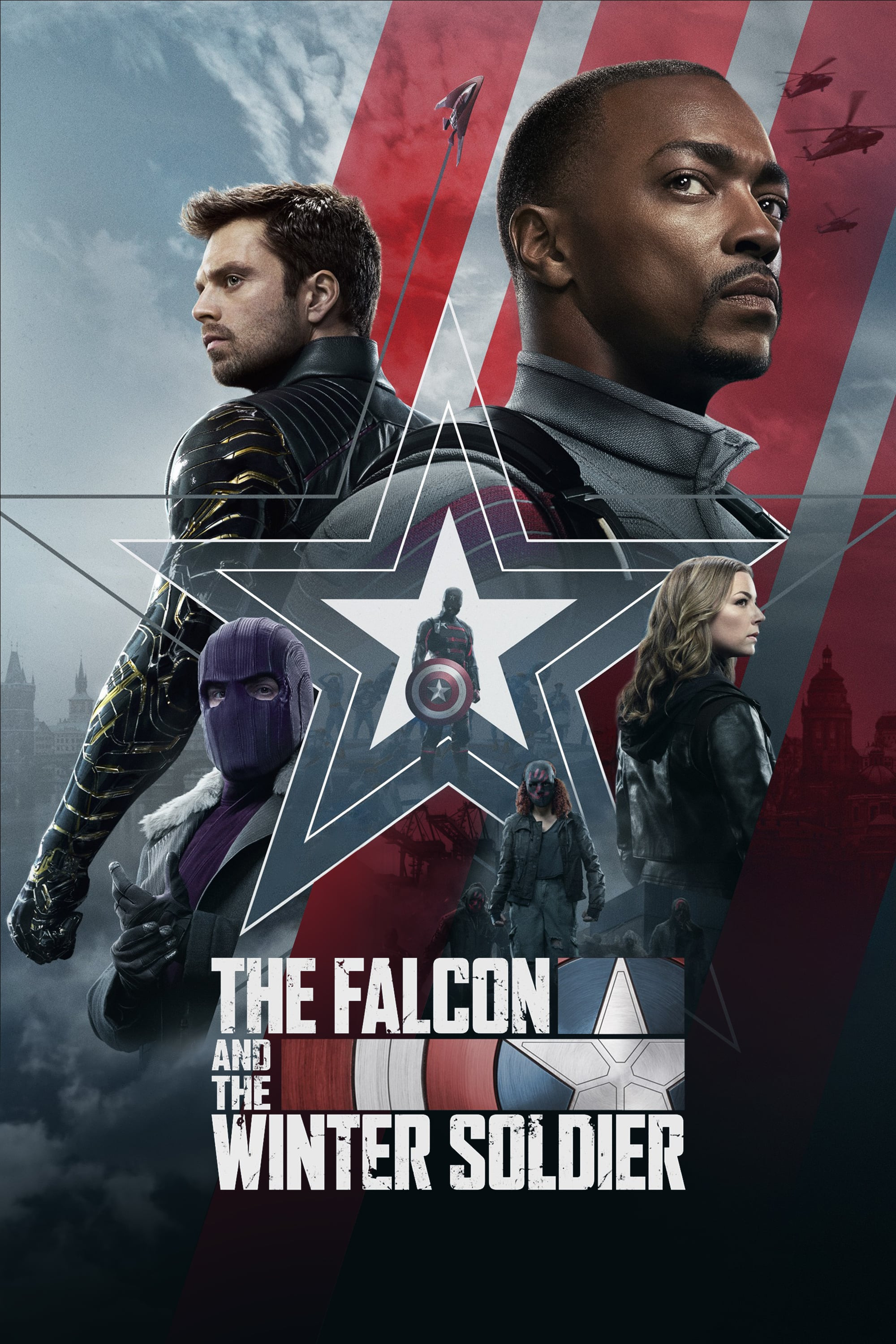
In the Disney+ era of the MCU, the series offers some of the most visceral, grounded action. Sam Wilson's aerial combat through gorges before deploying as Falcon in the opening sequence exemplifies aerial choreography that is rarely attempted with this clarity in theatrical films. The physical intensity of Winter Soldier is recalled in the truck pursuit through Munich, where Bucky Barnes jumps across cars and engages Flag Smashers in close combat. The John Walker vs. Dora Milaje fight is the most striking, as Walker's cruelty stands in stark contrast to the Dora's skillful, lethal fighting—a visual debate on what Captain America should be.
Sometimes, though, the action is hampered by television limitations. Some of the wirework seems incomplete, and the final battle against Karli Morgenthau seems hurried and spatially disorganized. Nevertheless, the series achieves a physicality that CGI-heavy MCU projects frequently lack when it dedicates itself to practical stunt work, such as Sam's practice throwing shields, Bucky's arm combat, and the vicious alley fight between Bucky and John Walker.
This is the series' pinnacle of success. With purposeful patience, Sam Wilson's arc develops from reluctant hero to deserving Captain America. We witness him give up the shield, face institutional racism in banking and the military, struggle financially as a contractor, and finally reimagine what Captain America stands for in a complex, contemporary world. Every stage—pride, uncertainty, rage, and, at the end, earned confidence—is sold by Anthony Mackie.
Bucky Barnes is treated with the same consideration. His "amends list"—a list of those he injured while serving as the Winter Soldier—offers a tangible metaphor for healing. We witness therapy sessions, uncomfortable social encounters, and the terrible moment when his programming momentarily reactivates, yet the series doesn't rush his recovery. As he progressively softens from his hardness into something that resembles tranquility, Sebastian Stan portrays Bucky as a guy learning to be human again.
Even the adversarial caricature of John Walker develops into tragedy. Rather than being evil, his transformation from a renowned soldier to a murderer who smashes shields seems inevitable—a man shattered by unrealistic ambitions. Wyatt Russell captures Walker's desperation so well that, despite your criticism of his failures, you can see why he fails.
The antagonistic banter between Mackie and Stan, which began in the automobile scene of Civil War, develops into a true comedy alliance. The competitive staring match on the plane, Bucky's subtle criticism of Sam's dating life, and their couples therapy argument—these instances humanize superheroes via everyday conflict. Because of their forced proximity and shared suffering, their chemistry is earned friendship rather than warm friendship.
The show deftly surrounds them with equally captivating dynamics: Zemo's aristocratic humor at their expense, Sam's complex past with his sister Sarah, and Bucky's tender mentoring of Yori. These connections have a genuine sense to them, implying pasts outside of the screen.
With uncommon MCU sophistication, the series explores identity. The story is driven by Sam's identity crisis: is he "Black Captain America" or something else? He literally trains with the shield, fails, and adjusts until he finds a combat style that is different from Steve Rogers', as the narrative defies simple explanations. His dual background is visually synthesized in his ultimate suit, which combines Wakandan technology with his Falcon wings.
Bucky's identity struggle turns out to be just as intricate. He is more than just an "ex-assassin seeking redemption"; he is a man whose identity was stolen for many years. Instead of merely accepting forgiveness, his journey includes regaining agency—choosing his apartment, his companions, and his purpose. The show implies that identity is created, choice by choice, rather than fixed.
Even Zemo, who just returned from Civil War, wonders if identity corruption is a result of hero worship. Despite its severe nature, his anti-superhero worldview compels characters to consider their own mythology.
All of the main characters struggle with their inner demons. Sam's struggle between duty (the shield, the legacy) and personal desire (family, safety). Bucky's struggle between his right to happiness and his guilt. Walker's conflict between his violent tendencies and his service record. Karli Morgenthau's belief that justice is served by radicalism.
These conflicts are expertly visible in the series. Sam is looking at the shield in the fishing boat with his family. A possible trigger made Bucky's hand tremble. After consuming the super-soldier serum, Walker's eyes appeared in the mirror. Actors are able to explore psychological depth that is uncommon in superhero media since these issues are depicted with dramatic intensity rather than subtextual.
Here the series becomes genuinely divisive—and arguably its most interesting element.
- What works: The most blatant interaction with American racism in the MCU is found in the investigation of Isaiah Bradley, the secret Black super-soldier. Sam (and viewers) are forced to consider whose tales are conveyed by Carl Lumbly's portrayal of the resentful soldier who was jailed and experimented on while Steve Rogers rose to fame. Sam's last remarks to the Global Repatriation Council, in which he asks who makes the decision about who "moves on" from a crisis, reveal true political annoyance.
- What goes wrong: Well-meaning confusion is embodied by the Flag Smashers. Their tactics (terrorism, murder) are not sympathetic, but their cause (open borders, resource sharing for displaced populations) is. However, the show never really examines why radicalization took place, turning Karli from a potentially nuanced revolutionary into an unstable antagonist. The series' eventual validation of political institutions rather than systemic critique makes the "both sides" framing of refugee problems seem wimpy.
Although it avoids any general institutional comments on military heroics, the John Walker plotline—white soldier gaining undeserved status and turning violent right away—works as an individual character study. Because the show aims to be "topical" without being specific, the commentary is both overbearing and undeveloped.
The story is essentially misrepresented by the six-episode format. The plot mechanics in Episodes 2-4 are repetitive: travel to a destination, get exposition, have a small action scene, discuss morality, and repeat. Despite its impressive visuals, the Madripoor sequence effectively stops the story for Zemo fan service. Although emotionally poignant, Bucky's side quest with Ayo further slows down the action.
On the other hand, the finale rushes important events: John Walker's redemption as a U.S. Agent, Bucky's completion of his apologies, Sam's acceptance of the Captain America mantle, and the resolution of the Flag Smasher menace. Minutes are given to these; they deserve episodes. At six hours, the show feels both too long and too short for its thematic goals.
It's evident that the COVID-19 production disruptions required rewrites. Some plot points, such as the second Flag Smasher bombing and Sharon Carter's Power Broker revelation, seem to be introduced or resolved suddenly. The pacing problems are existential rather than just structural, implying that a distinct, possibly superior series was there in previous iterations.
As the MCU shifts from a theatrical spectacle to serialized storytelling, The Falcon and the Winter Soldier symbolizes its growing pains. It reaches true emotional resonance when character is highlighted, such as Sam and Bucky's reluctant alliance and their own struggles with trauma and legacy. The performances transcend material that sometimes falters beneath its own ambitions, especially Mackie's star-making turn and Stan's wounded vulnerability.
However, the show serves as a warning about the perils of pursuing "prestige television" goals without making a structural commitment. Its social criticism aims for revolutionary impact yet is content with liberal assurance. Its pacing suffers from streaming bloat yet longs for cinematic breathing room. It presents intriguing concepts, such as what Captain America means in a world after the Blip.—then, instead of implementing systemic change, addresses them through speeches.
The theatrical MCU used accumulation to create universes. According to this series, growth necessitates not only more material but also various kinds of content—stuff that is prepared to take the chance of alienating viewers in order to engage in real investigation.
Those risks are not taken by The Falcon and the Winter Soldier. However, it makes strong enough gestures in their direction to continue being captivating, if ultimately annoying, entertainment.
Staff:
Created by: Malcolm Spellman
Based on: Marvel Comics
Directed by: Kari Skogland
Produced by: Ariella Blejer and Dawn Kamoche
Starring: Sebastian Stan, Anthony Mackie, Wyatt Russell, Erin Kellyman, Danny Ramirez, Georges St-Pierre, Adepero Oduye, Don Cheadle, Daniel Brühl, Emily VanCamp, Florence Kasumba, and Julia Louis-Dreyfus.
Cinematography: P.J. Dillon
Edited by: Jeffrey Ford, Kelley Dixon, Todd Desrosiers, and Rosanne Tan
Music by: Henry Jackman
Production companies: Marvel Studios
Distributed by: Disney+
Release date: March 19 – April 23, 2021
Running time: 50–61 minutes


Comments
Post a Comment