The Adam Project
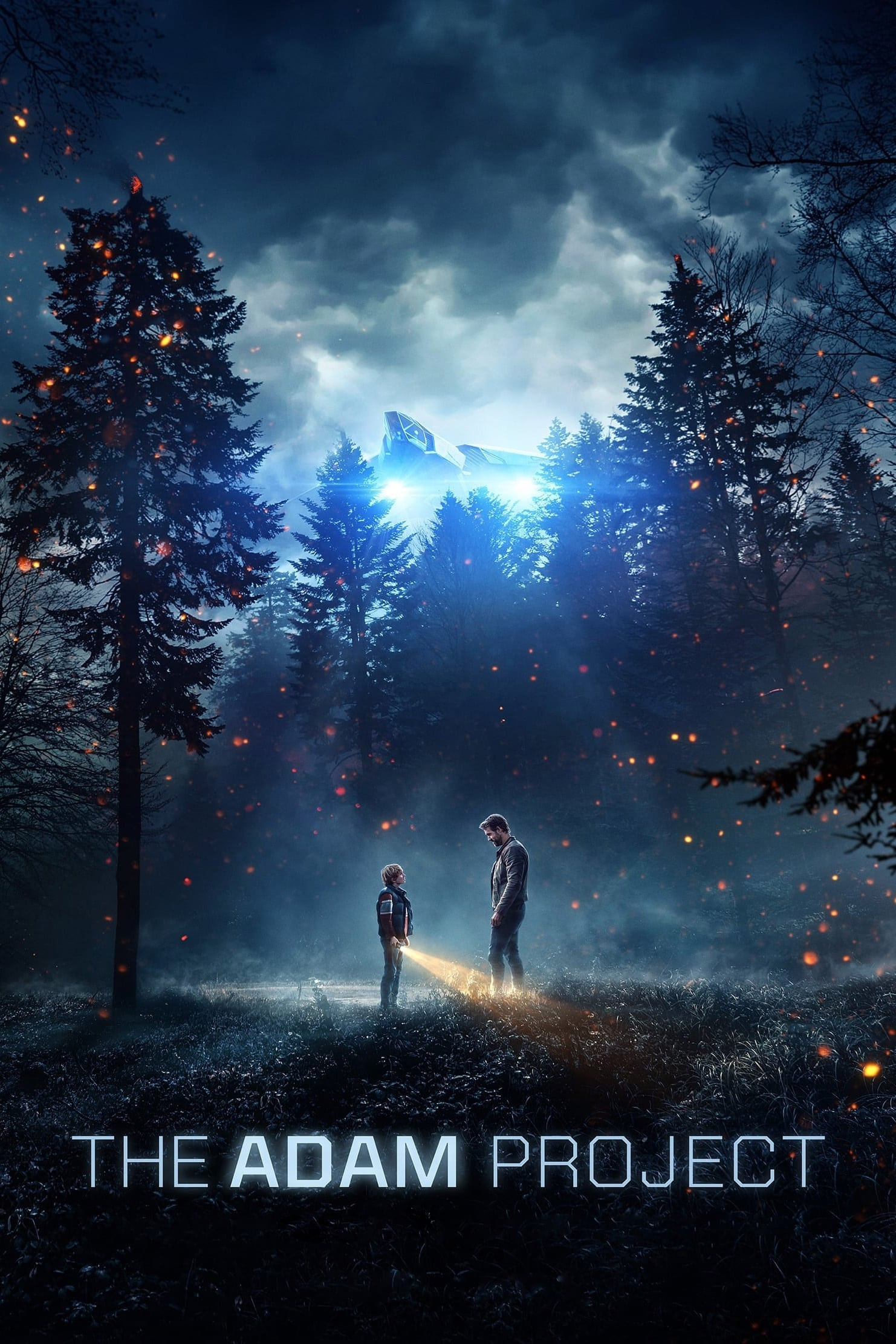
Action is staged by Shawn Levy with a workmanlike efficiency that puts order before disorder. Spencer Davis Group's "Gimme Some Lovin'" serves as the soundtrack for the film's thrilling space pursuit, which sets the fun tone right away. The hand-to-hand fighting is expertly choreographed, especially the mid-mayhem reunion sequence that strikes a balance between real emotion and fisticuffs. Although there are a few effects-heavy scenes later in the movie that have inconsistent computer-generated imagery, the action usually enhances rather than overpowers the narrative. Even while the execution sometimes seems similar, the futuristic technology—time jets, magnetic particle accelerators, and "hard-light" weapons—offers visual variation.
The Adam Project exudes a sincere, modest charm that is becoming more and more uncommon in contemporary blockbusters. Comfort cinema is meant to be embraced rather than challenged. The movie freely displays its influences, evoking a "warm and fuzzy" vibe reminiscent of Amblin adventures from the 1980s. Levy maintains a close focus on the Adams' relationship because he recognizes that appeal comes from character connection rather than spectacle. The film's positive vibes are contagious, even when the science fiction elements make it difficult to believe. It's comforting, cozy, and just what you need on a leisurely weekend—the cinematic equivalent of a beloved blanket from childhood.
Even though it is a derivative, the movie rarely loses viewers' interest. The story keeps moving forward throughout the 106-minute running length. Scenes are kept interesting by the fish-out-of-water comedy of two Adams navigating their shared trauma, while the mystery surrounding Laura's abduction adds compelling stakes. Through dynamic camera work and the natural humor of Reynolds responding to his own childhood discomfort, Levy's direction makes sure that even exposition-heavy passages regarding time-travel paradoxes have visual interest. The movie recognizes that consistent energy and emotional clarity are all that are needed for participation, not complexity.
The film's examination of bereaved family ties is its central theme. While Big Adam regrets his treatment of his mother Ellie for decades, Young Adam's rage over his father's passing shows up as sardonic cruelty. With Jennifer Garner's face expressing "fear and wonder and gratitude" in a masterful wordless performance, the sequence where Big Adam meets Ellie at a pub and gives her the encouragement about parenting that she sorely needs is incredibly touching. The film's dramatic culmination is the reconciliation between Big Adam and his father Louis (Mark Ruffalo), who declares that his sons are his future and refuses to learn of his imminent death. These relationships provide relatable emotional beats about parental love, remorse, and the challenge of grieving, transcending the sci-fi setting.
There is a surprisingly sensitive core beneath the jokes and laser swords. Moments like Young Adam's remark that "it's easier to be angry than it is to be sad"—a statement that holds true wisdom—are prime examples of the film's emotional intelligence. Big Adam finds catharsis without feeling undeserved when he realizes that his suffering does not define him and that second chances are conceivable. After the double dosage of wise-cracking that comes before it, the finale's emphasis on repairing father-son scars lands with unexpected sweetness. This movie, which is about "growing into better people and resolving broken relationships," touches on these subjects in a genuine way that enhances the content.
The revelation of the movie is Walker Scobell. The newbie does more than just mimic Reynolds; he absorbs the actor's emotional pulses and rhythms so well that the casting seems natural rather than predetermined. He studied Deadpool 2 "way too many times" since he was seven years old, and it paid off in a performance that rivals Reynolds "punch for punch." Reynolds himself gives spectators precisely what they anticipate, but he does so with remarkable restraint; Levy keeps him in check, so the antics don't overpower the story. While Mark Ruffalo's "adorably befuddled Disney dad" enthusiasm serves as the ideal counterpoint to the Adams' sarcasm, Jennifer Garner gives Ellie wounded resilience. Even Zoe Saldaña gives Laura a true sense of urgency and warmth in her brief screen time.
The humor uses a variety of frequencies at once. "I'm sorry to interrupt what I'm sure is going to be a really scary threat" is one of the typical Reynolds zingers, but there's also the meta-comedy of two Adams making fun of each other with the same wit. While Young Adam's unvarnished views cut through adult pretense, Big Adam's difficulty in facing his own childhood awkwardness is a goldmine for the movie. With "the same rhythms, both in observation and in snark," Reynolds and Scobell's conversation creates humor that is rooted in character rather than circumstance. As characters recognize the ridiculousness of "magnetic particle accelerators" and "Infinitely Shifting Plasma Containing Algorithms," even the science fiction jargon becomes amusing.
The film's pacing is both its strongest and weakest point. Levy keeps things going quickly enough to avoid stagnation, and the first half is especially good as the two Adams work through their tentative partnership. "Barreling forward in an effort to speed through its plot so fast that people lose sight of its holes" is how the second half goes from slow to fast. Character-driven humor is forced to give way to plot-heavy action that seems hurried rather than earned when the enemy shows up. The efficiency—"it doesn't need three hours just to tell a good story"—may be appreciated by some viewers, but others will feel that the emotional beats need more space. While avoiding boredom, the film's refusal to drag on sometimes detracts from its own emotional impact.
Despite its snappy banter and sincere emotional passages, Jonathan Tropper's screenplay has structural inconsistencies. When it comes to family relationships, the dialogue shines, but when it comes to exposition, time-travel laws become "impenetrable conversations about fixed origin points" that confuse rather than clarify. Maya Sorian, the antagonist, is still incredibly flat, "a plot device that could have been filled by anyone" with only "power and money" as incentives. The film's repeated thematic beats and different endings allude to either studio meddling or indecision. The writing soars when character is the main focus; it crashes into confusion when story mechanics are the main focus.
This is the biggest problem with the movie. The Adam Project's influences are so noticeable that they run the risk of suffocating its unique individuality. everything sounds more like well-manicured nostalgia than unique work since the DNA of Back to the Future, The Terminator, Frequency, The Last Starfighter, and E.T. is so evidently woven throughout everything. The "Amblin-esque" amazement, speeder bike chases, and weaponry next to lightsabers all seem to be algorithmically designed to elicit identification rather than surprise. critics say it looks like "a bland streaming blockbuster seemingly cooked up by Netflix's algorithms to resemble a cheap imitation of J.J. Abrams ripping off Steven Spielberg". Even the emotional beats—parental reconciliation, time-travel salvation, and the dead father—follow well-known patterns. Viewers are left with the vacuous comfort of familiarity rather than discovery as the film skillfully employs its borrowed themes but rarely ventures to innovate upon them.
Staff:
Directed by: Shawn Levy
Written by: Jonathan Tropper, T. S. Nowlin, Jennifer Flackett, and Mark Levin
Produced by: David Ellison, Dana Goldberg, Don Granger, Shawn Levy, and Ryan Reynolds
Starring: Ryan Reynolds, Mark Ruffalo, Jennifer Garner, Walker Scobell, Catherine Keener, and Zoe Saldaña.
Cinematography: Tobias Schliessler
Edited by: Dean Zimmerman and Jonathan Corn
Music by: Rob Simonsen
Production companies: Skydance, 21 Laps Entertainment, and Maximum Effort
Distributed by: Netflix
Release date: March 11, 2022
Running time: 106 minutes


Comments
Post a Comment