Moon Knight
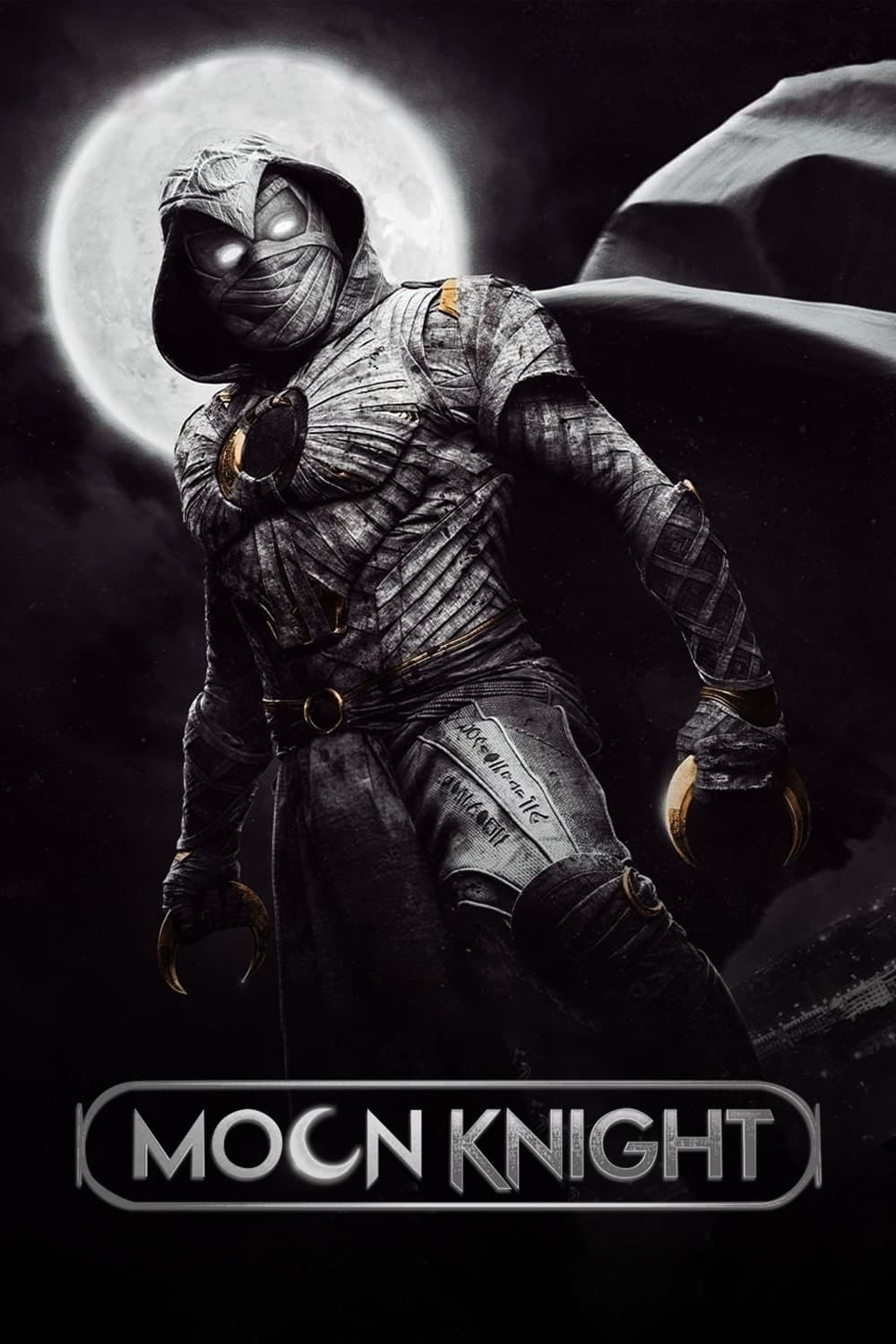
The series stands out for its creative, character-driven fighting that takes advantage of the protagonist's damaged mental state. The final battle in Episode 3's Mogart compound, which includes crescent blade slaughter, Egyptian jousting, and smooth transitions between Marc and Steven, is a technological marvel that caused cinematographer Gregory Middleton "many sleepless nights" due to its complexity. The show draws inspiration from martial arts cinema, particularly The Raid and Oldboy, utilizing long takes and continuous shots that emphasize visceral impact over CGI chaos. When Marc Spector fights, the violence is used to forward the plot; the scene's emotional center is Steven's disgust at Moon Knight's cruelty. Since we're never really clear who is in control of the body, the action is filtered via dissociative experience, which gives it weight and creates suspense that goes beyond typical superhero fisticuffs.
The visual language created by Gregory Middleton and Andrew Droz Palermo alternates between hallucinogenic myth and harsh realism. The series suggests a world seen through broken perception by using ARRI ALFA anamorphic lenses to produce significant falloff at the frame's edges. The color scheme changes as the characters do; Marc's world becomes desaturated with blood-red highlights and mercenary blues, while Steven's scenes are illuminated with warmer, museum-style lighting. With Gregg Araki-inspired psychedelia seeping into ancient Egyptian afterlife imagery, Episode 4's transition into the mental hospital and the Duat symbolizes the visual pinnacle. Technical accuracy supporting psychological storytelling is demonstrated by the camera work during alters shifts, which feature subtle body contortions filmed in continuous views.
Moon Knight represents Marvel's most ambitious and largely successful engagement with mental illness. Oscar Isaac's dedication to truth and in-depth discussions with specialists resulted in the representation of dissociative identity disorder (DID). Distinct personality states, dissociative amnesia, and the protective role of alters are all depicted in the series with a level of depth that is uncommon in speculative literature. A masterwork of psychological television, "Asylum" from Episode 5 shows that Marc invented Steven as an alter ego to help him endure the tragedy of his early life—his brother drowning and the violence he suffered from his mother afterward. The program views DID as a survival strategy rather than a superpower, demonstrating how Marc created Steven to have the affectionate childhood he was not given. Although some critics point out that Jake Lockley's "dangerous alter" cliche and the visual dramatization of switching (flickering lights, stuttering audio) deviates from actual experience, the portrayal as a whole de-stigmatizes by showcasing a hero who perseveres despite everyday setbacks.
By considering the Ennead as spatial reality rather than a metaphor, the series masterfully incorporates Egyptian cosmology into the MCU framework. F. Murray Abraham's portrayal of Khonshu, a multifaceted deity who is neither entirely good nor entirely evil, but rather a force of vindictive justice that reflects Marc's own suffering, is delivered with amazing seriousness. The scales that weigh hearts against feathers, Taweret's instruction through the afterlife, and the visual manifestation of the Duat all show respectful engagement with the source material while meeting the emotional needs of the story. Genuine moral complexity is created by the contrast between Khonshu's chaotic justice and Ammit's preemptive judgment, raising the question of whether punishment for uncommitted transgressions is tyranny or justice. By establishing a cosmology in which gods require human avatars just as much as humanity require divine purpose, this mythical framework raises the content above that of typical superhero fare.
Oscar Isaac gives a technical masterwork of vocal control, physical metamorphosis, and emotional vulnerability that may be the best performance in the MCU's Disney+ period. The subtle frequencies that he uses to distinguish between Marc and Steven are the change in posture, the modulation of accent (American for Marc, British for Steven), and the hardening or softening of the look. Masterful acting can be seen in the parts as he alternates between alters in continuous shots, delicately twisting his body to convey personality changes. Marc's burdened competence and self-loathing, Jake's unnerving efficiency, and Steven's jittery charm and archaeological excitement are all distinct energies that Isaac contributes to each character. Layla El-Faouly, played by May Calamawy, is a character whose agency and emotional complexity go beyond the "love interest" cliché. Arthur Harrow, played by Ethan Hawke, defies stereotypes of villains by being a cult leader with such serene assurance that his depravity seems almost plausible.
Egyptian instruments and contemporary thriller textures are combined in Hesham Nazih's score to create a soundtrack as fragmented as the protagonist. As the characters change, so does the music; Marc's motif features menacing strings and martial percussion, while Steven's theme includes lighter, almost comical parts. Diegetic music is used to create a tonal playfulness that is maintained throughout the series' darkest moments, especially in the opening chase set to "A Man Without Love." The way the sound design captures the sensation of dissociation—audio stutters, overlapping voices, and the startling transitions between the internal monologue and the outside world—deserves particular attention. After being processed to imply both psychological intrusion and ancient authority, Khonshu's voice takes on a life of its own.
The show finds it difficult to strike a balance between its conflicting desires for character development and plot advancement. As a slow-burning psychological thriller, the first four episodes are excellent because they carefully set up Steven's bewilderment and the eventual discovery of Marc's presence. "Extraordinarily slow up front for a series that is introducing a new, monumental character" is how viewers who are used to more conventional superhero propulsion find this cautious pace frustrating. The rear half speeds up a lot, sometimes at the expense of clarity. Given its emotional impact, the asylum revelation in Episode 5 feels a little hurried, and the apocalyptic stakes of the finale—gods fighting in Cairo—conflict with the close-knit character development that came before it. The series wants to be both Legion-style psychological horror and Indiana Jones adventure, and the gear shifts between these modes occasionally jar. What starts out as an identity mystery turns into a superhero story set against the clock, and the changeover isn't totally smooth.
Plot mechanics are weak in Jeremy Slater's screenplays, while character dynamics and thematic coherence are strong points. When Marc and Steven dispute, the conversation erupts—"You're like a parasite!" —but becomes awkward when discussing Egyptian gods and their laws. Instead of relying on visual storytelling, the series suffers from "long scenes that over-explain the Gods, the roles they play, and what they want". Though brilliantly enacted, Arthur Harrow's reasons are still a little vague—his wish to bring Ammit back to life lacks the particularity that would make him more than a philosophical foe. Jake Lockley's post-credits scene debut feels more like sequel bait than a well-earned narrative development. Some critics note a "total lack of creative vision" and "bizarre pacing," arguing the series "cribs from far better properties such as Indiana Jones, The Mummy and Legion, but falling far short of all of them". However, the language attains a true profundity uncommon in superhero media when it concentrates on the internal landscape—Marc's pain, Steven's invention, and their grudging integration.
Moon Knight represents Marvel's most formally adventurous Disney+ series, prioritizing psychological depth over franchise connectivity. A character study that goes beyond the typical constraints of the genre is produced by Oscar Isaac's complex performance, and the Egyptian legendary context adds visual and thematic depth. The ambition on display—as well as the moments of tremendous emotional power—suggest a company eager to take creative risks, but the pacing and narrative flaws prevent it from reaching true brilliance. This is a must-watch for anyone looking for superhero entertainment with sophisticated adult psychology and a strong cinematic aesthetic.
Staff:
Created by: Jeremy Slater
Based on: Marvel Comics
Directed by: Mohamed Diab, Justin Benson, and Aaron Moorhead
Produced by: Peter Cameron
Starring: Oscar Isaac, May Calamawy, Karim El Hakim, F. Murray Abraham, Ethan Hawke, Ann Akinjirin, David Ganly, Khalid Abdalla, Gaspard Ulliel, Antonia Salib, Fernanda Andrade, Rey Lucas, Sofia Danu, and Saba Mubarak.
No. of episodes: 6
Cinematography: Gregory Middleton and Andrew Droz Palermo
Composer: Hesham Nazih
Edited by: Cedric Nairn-Smith, Joan Sobel, and Ahmed Hafez
Production companies: Marvel Studios
Distributed by: Disney+
Release date: March 30 – May 4, 2022
Running time: 45–53 minutes


Comments
Post a Comment