Emergency
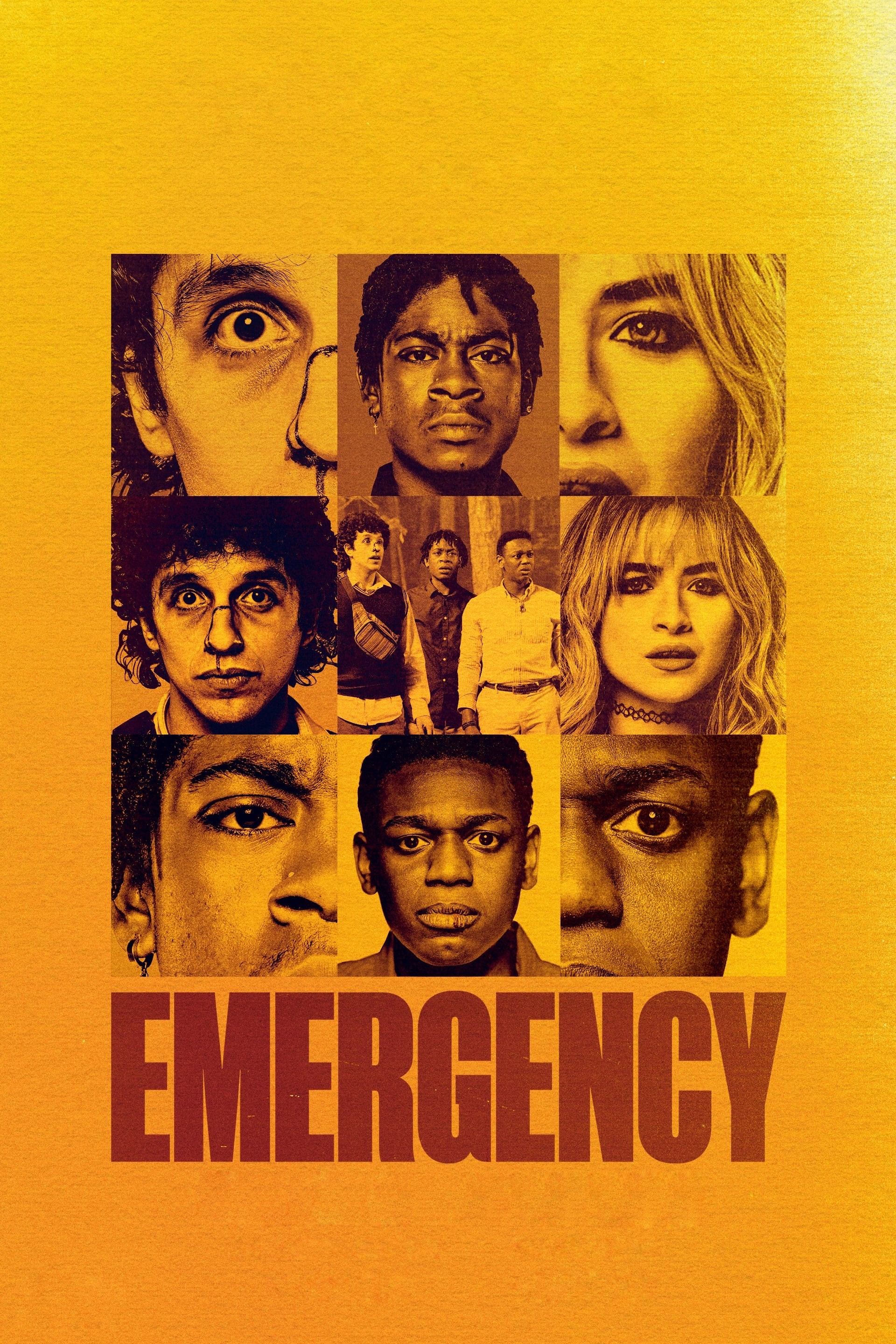
Emergency by Carey Williams starts out as a well-known college comedy—two best friends organizing a spectacular night of partying, joking about their futures, negotiating the social hierarchies of school life—but it quickly turns into something far more disturbing. This feature extension, which is based on the award-winning 2018 short film by K.D. Dávila, takes a straightforward, terrifying idea and utilizes it to examine the racial concerns that underlie American society, producing a work that is both devastating and humorous, amusing and extremely unsettling. It is a film that recognizes the unique fear of being a person of color in a position where one must prove one's innocence and when doing the "right" thing becomes risky only because of one's identity.
Emergency is fundamentally a film about friendship—the kind of close, early relationship between young guys that is rarely depicted in movies with such gentleness. As Sean and Kunle, two seniors whose relationship goes beyond the "odd couple" dynamics implied by their outward differences, RJ Cyler and Donald Elise Watkins create instant, genuine connection. While Kunle is the cautious scientist, his Princeton future depends on his careful behavior and lab results, Sean is the rambunctious planner who is desperate to establish their history with the "Legendary Tour" of seven fraternity parties. Sharp, precise, and truly humorous allusions to The Lion King, arguments about "Black excellence," and mocking that passes for affection are all part of their banter.
The film's willingness to allow these men to be vulnerable with one another is what sets it apart from other buddy comedies. Their disagreements about whether to contact 911 after discovering Emma unconscious on their floor go beyond simple practical considerations; they also touch on their divergent views of risk, authority, and the American ideal of safety, which only comes to those who behave flawlessly. The weight of years of friendship put to the strain by unfeasible circumstances is carried by their eventual physical clash and subsequent reunion. The sequence in which they ultimately embrace, "crescendoing into a tight as fu*k hug," is a rare recognition in film that friendship between straight males can be this emotionally and physically intense.
Their Latino roommate Carlos, played by Sebastian Chacon, gives the trio a distinct energy that is both humorous and illuminating: he is serious, silly, and unaware. Instead of being characterized as ignorant, his ignorance of the threat they face is seen as privilege, a different relationship with the police that enables him to provide solutions that the others are aware are foolish. Because of their shared space and sense of humor, the three of them have a genuine relationship that makes their final breakup and reunion heartwarming.
The comedy genius of the movie works on several levels. The instant laughs of college life are there, including the ridiculousness of fraternity parties, the mixtape preparations, and Carlos's lack of knowledge of video games. However, the darker humor comes from the actual circumstances, from the growing humiliations and close calls that would be absurd if they weren't so horrifying. The humor arises from the contrast between Sean and Kunle's intentions and how the world sees them, between their dread and the casual brutality of others, as they attempt to leave Emma outside a party and are chased away by white students hurling items.
K.D. Dávila's screenplay, which took home the Waldo Salt Screenwriting Award at Sundance, recognizes that humor is a means for these folks to cope with tragedy and preserve their dignity in situations that deprive them of it. The humor heightens the tension rather than lessens it, setting the stage for throat-clearing laughing. The satire is incisive enough to make people laugh when a couple with a "Black Lives Matter" sign on their lawn comes out of their home and accuses the main characters of drug peddling right away.
Character development turns out to be more inconsistent. The transformation of Kunle from a rule-follower to someone who realizes that rules do not shield him is evident and impactful. His final moment, exhibiting PTSD symptoms at the sound of sirens, lands with devastating impact, indicating that the events of the night have fundamentally changed his relationship with authority and safety. Sean's path is less clear; his reluctance to dial 911 at first appears to be driven as much by a desire to keep having fun as by real dread, which makes his subsequent panic seem a little undeserved. The movie wants us to comprehend both viewpoints, but it doesn't always give Sean the same sense of self that it gives Kunle.
There has been much discussion about whether the premise—would they really not call 911? —is realistic. Some viewers, especially white viewers, believe that the characters' choices are illogical and the result of script devices rather than real-world experiences. For others, especially viewers of color, the calculation of risk vs survival is painfully familiar, and the terror is instantly identifiable. The film's efficacy as social criticism is demonstrated by this disparity in reception, which compels viewers to consider how racialized experiences of American institutions differ. The "mixed" realism is a Rorschach test that reveals the viewer's personal connection to privilege and power, not a weakness.
Throughout the story, dramatic tension varies. The attempt to take Emma to the hospital in the midst of the movie creates real tension with a string of growing complications—shattered taillights, unintentional alcohol use, Emma's dramatic awakening. However, there are times when the pacing falters, with scenes going beyond what is necessary for the story or, on the other hand, hurrying through parts that should be explored. Maddy (Sabrina Carpenter) and her pals are introduced as villains, which occasionally results in an artificial external conflict. Their distrust is reasonable, but their anger occasionally verges on caricature.
Emergency is both universal and specific in its societal observation. It recognizes that racism is not necessarily overt violence but rather the accumulation of minor humiliations, the ongoing consideration of how one's actions will be interpreted, and the weariness of needing to be flawless in order to be safe. The look between Sean and Kunle when they realize what calling the police might mean, the hesitation before knocking on a white neighbor's door, and the final encounter with law enforcement that transpires exactly as feared despite all precautions are some of the film's most thought-provoking silences rather than speeches.
The movie doesn't provide reassuring morals or simple answers. The conclusion rejects the redemption narrative that is usually required by popular film, with Kunle rejecting Maddy's apologies and Sean realizing his friend's trauma. There is only survival and the understanding that survival itself has costs—no growth, no learning, no reconciliation. What makes Emergency truly thought-provoking—a conversation starter rather than a conversation ender—is this refusal to resolve.
Emergency is a film of paradoxes that come together to produce something powerful: a night of partying that turns into a nightmare of American racial reality, a comedy that turns into a thriller, and a friendship that is put to the test by social failure. It's true accomplishments—the chemistry of its leads, the wit of its humor, and the bravery of its commentary—outweigh its mixed features, which include uneven pace, occasionally shallow character work, and dramatic choices that push plausibility.
Carey Williams has created a work that challenges viewers' preconceptions about privilege, safety, and the cost of being young and Black in America while simultaneously entertaining and unsettling them. Although it is not a flawless movie, it is an essential one that expands the range of topics that "college comedy" can cover and finds moments of true emotional truth amid the mayhem.
Emergency provides benefits that last well beyond its duration for viewers who are prepared to endure its discomfort. It provides insight into a reality that is all too true for millions of Americans, which is equally beneficial to those who find its concept unrealistic.
Staff:
Directed by: Carey Williams
Written by: K.D. Dávila
Based on: Emergency by Carey Williams and K.D. Dávila
Produced by: Isaac Klausner, John Fischer, and Marty Bowen
Starring: RJ Cyler, Donald Elise Watkins, Sebastian Chacon, and Sabrina Carpenter.
Cinematography: Michael Dallatorre
Edited by: Lam T. Nguyen
Music by: Rene G. Boscio
Production company: Temple Hill Entertainment
Distributed by: Amazon Studios
Release date: May 20, 2022
Running time: 105 minutes


Comments
Post a Comment